We're living in an increasingly eco-conscious world and that's a very good thing. It is more important than ever for us all to play our part in caring for the planet – even when we go travelling and on holiday. Thankfully, the amazing country of Japan is one of the best places anywhere for eco-friendly and sustainable travel, as we'll explain.
If you want to reduce your carbon footprint by using public transport instead of a car, or by taking trains the length and breadth of the country rather than internal flights, you've come to the right place: Japan has incredible public transport, one of the best rail networks in the world, and you can get unlimited travel with the JR Pass. And that's just getting around. For eco-tourists, Japan offers a vast array of green activities: forest bathing and natural hot springs (onsen), shrines and temples where you can learn about traditional Japanese culture and religion, national parks with unmissable wildlife and spectacular scenery, climbing and hiking, river rafting, mountain-biking, diving and much more.
What is Ecotourism?
It may sound like a buzzword, but ecotourism has been around for decades and can be seen as a reflection of humanity's growing awareness of the need to protect and replenish natural environments and indigenous cultures. Ecotourism is often defined as responsible travel to natural areas that conserves the environment, sustains the well-being of local people, and involves interpretation and education. As you can tell, ecotourism isn't simply about being environmentally friendly, conservation and promoting sustainable travel, although it involves all of those. It is also about cultural awareness, preserving and celebrating the rights and spiritual beliefs of local people, putting money back into local communities, and considering the social and psychological impact of tourism.
A Brief History of Ecotourism in Japan
Eco-tourism has been established in Japan for decades, and the country is home to the Japan Ecotourism Society, which has close links to The International Ecotourism Society (TIES), the largest and oldest global ecotourism association. Japan is often associated with modernisation and technology and, while that's true, it is also a world-leader in environmental practices such as recycling. The rural community of Kamikatsu, for instance, became one of the world's first "zero-waste" towns after making a pioneering zero-waste declaration. The country is also surprisingly rural and rustic once you get outside big cities like Tokyo and Osaka, and it is hugely proud of its traditions and culture, taking significant steps to preserve them for visitors and future generations. All of this, combined with an incredible natural environment and rich biodiversity, makes this island nation a particularly special green destination.
Why Trains are the most Eco-Friendly Way to Travel
Climate-conscious travellers around the world are increasingly choosing trains over planes — high-profile advocates such as Greta Thunberg have publicly championed train travel over flying — and environmental organisations widely promote rail as one of the greenest ways to get around. The reason is simple: study after study finds that rail travel produces far lower carbon emissions per passenger than either flying or driving — typically only a small fraction of the CO₂ of an equivalent flight. In Japan specifically, the shinkansen runs on electricity, making it more sustainable still. It's another great reason why the JR Pass is indispensable when visiting Japan.
You could reduce your footprint even further by picking a single area of Japan and exploring it to the max. For example, Kansai has many cities close together — Kyoto, Osaka, Kobe, Wakayama and Himeji. Using a regional ticket like the Kansai Area Pass saves both on environmental impact and on your budget. Once at your destination, public transport is an affordable and sustainable way to get around, whether via a metro network or city buses. And of course, for shorter distances, cycling or walking is even better.
Japan's UNESCO natural wonders
If you're travelling for nature and biodiversity, Japan's UNESCO World Natural Heritage Sites are the crown jewels. There are five, and between them they showcase the astonishing range of this archipelago:
Amami-Ōshima, Tokunoshima, northern Okinawa Island and Iriomote Island — the newest, inscribed in July 2021 for their extraordinary biodiversity. These subtropical islands in the Ryukyu arc are home to rare endemic species found nowhere else on Earth, including the Amami rabbit, the flightless Okinawa rail and the Iriomote cat. Because these ecosystems are fragile, visitors are asked to travel especially responsibly here.
Shiretoko (Hokkaido, inscribed 2005) — a wild peninsula where the sea meets the mountains, famous for brown bears, sea eagles and seasonal drift ice.
Ogasawara Islands (Tokyo, 2011) — remote subtropical islands, sometimes called "the Galápagos of the Orient" for their unique evolution.
Shirakami-Sanchi (Aomori/Akita, 1993) — one of the last virgin beech forests in East Asia.
Yakushima (Kagoshima, 1993) — the ancient cedar island described below.
Green Activities in Japan
Japan is a dream destination if you're going green. Here's a selection of eco-friendly and sustainable activities, all in the spirit of ecotourism, to consider during your stay.
Visit Japan’s National Parks
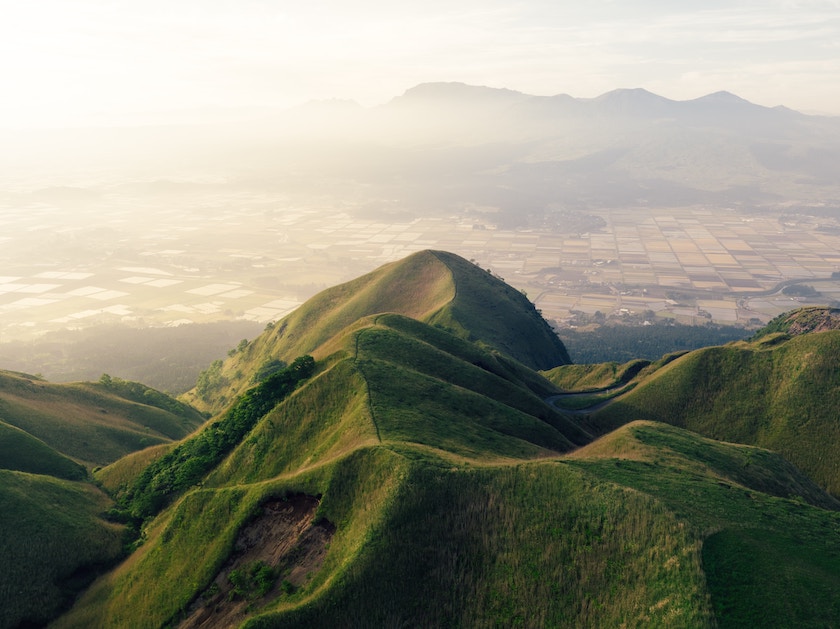
Japan has 35 national parks and, with volcanoes, forests, marshes, beaches, coastlines, underwater marine habitats, onsen (hot springs) and snowy mountains all in one country, it's safe to say they are among the most spectacular in the world. Given the number and diversity, recommending just one or two is very tricky, but here are a couple of suggestions.
Fuji-Hakone-Izu National Park
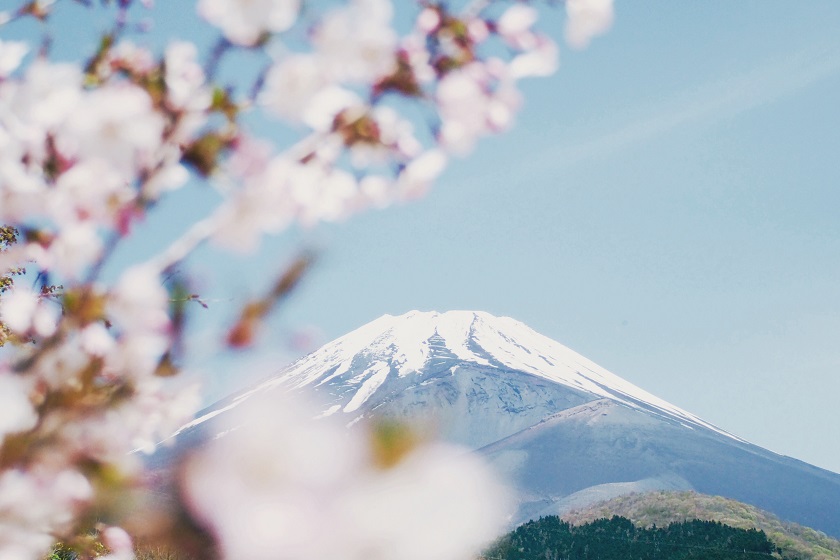
Arguably Japan’s most famous national park, Fuji Hakone Izu is, of course, home to Mount Fuji – the beautiful and iconic active volcano. The area has much to offer including Fuji Five Lakes, the famous Chureito Pagoda, Hakone, the Izu Peninsula and the Izu Islands, as well as mountain climbing, peaceful onsen, beautiful beaches, and much more. It’s also one of the more accessible national parks being a straightforward journey from Tokyo. Using your JRailPass, take the JR Chuo Line to Otsuki Station from Shinjuku Station in Tokyo before transferring to the Fujikyu Railway Line to Kawaguchiko Station.
Yakushima National Park
The heavily forested, atmospheric and beautiful Yakushima National Park, on the southern island of Yakushima, is home to Japan’s oldest trees, including Jomonsugi, an enormous cedar believed to be an incredible 7,000 years old. Now that’s reconnecting with nature. To reach Yakushima, take the train from Tokyo to Kagoshima via the Tokaido, Sanyo and Kyushu Shinkansen and then catch a high-speed boat to Yakushima.
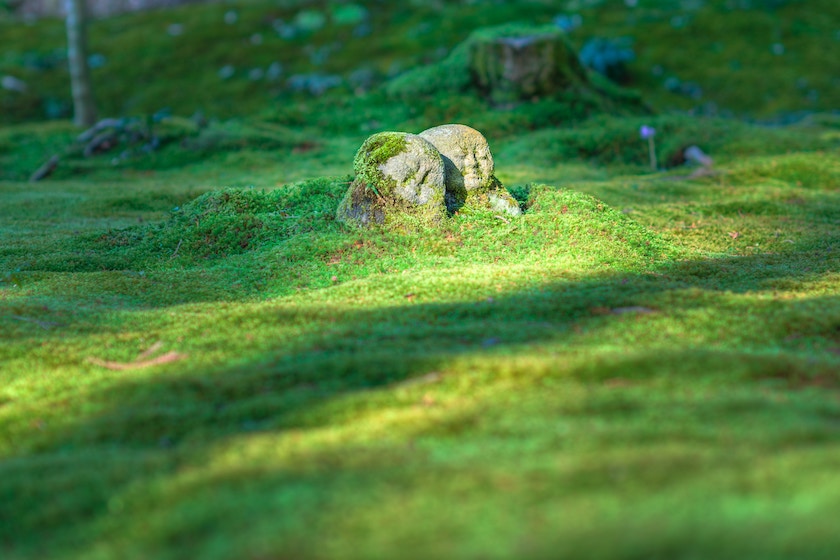
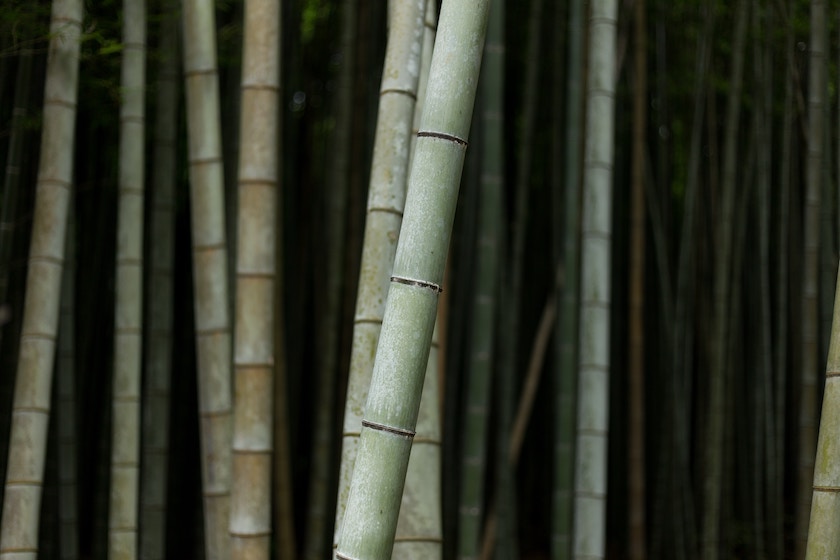
Japan's national parks are also the perfect place to try the art of shinrin-yoku, or forest bathing. This has nothing to do with taking a dip in an onsen — instead, it's about 'bathing' in the beauty, wonder and majesty of the forest itself.
Viewing the Sakura
Hanami translates as 'flower viewing' and is the centuries-old tradition of watching and appreciating the sakura (Japanese cherry blossom) when it blooms each spring. In ancient Japan, the arrival of the sakura marked the beginning of spring and the rice-planting season, but hanami is also about the appreciation of nature and relates to Shinto and Buddhist beliefs about the impermanence of life. You can find out more in our guide to viewing the sakura.
Eat Local
Japan is a paradise for foodies, and one way to give back to local communities is by eating locally produced, sustainable produce from small vendors. You can learn more about sushi and ramen in our guides. With so many regional specialities and small, local producers, eating local is a delicious way to travel responsibly.
Learn about Japan’s culture, religion and traditions
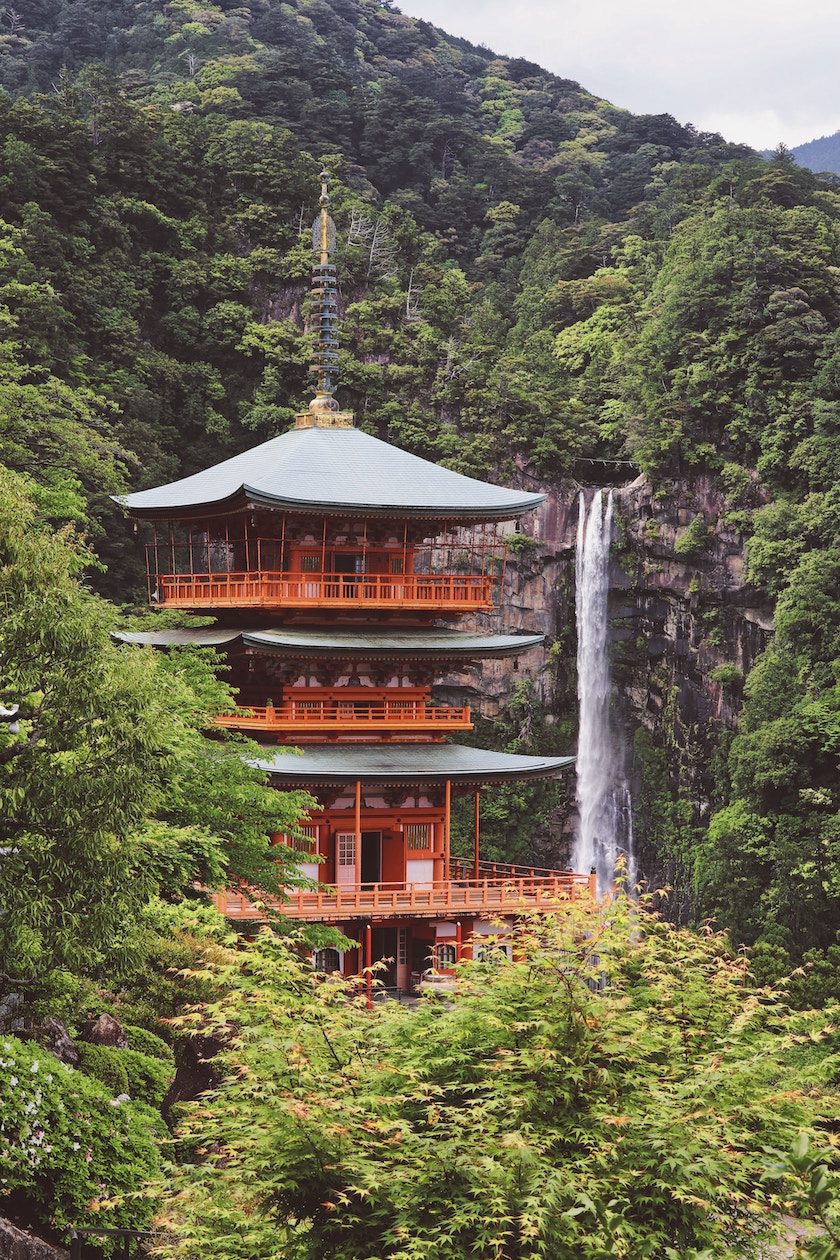
One way to connect with Japan’s history and culture is by visiting its temples and shrines and learning about the country’s spiritual beliefs. For much more on this, read A Spiritual Guide to Japan. Kyoto and Nikko are especially famous for their temples and shrines of course, but can get very busy with tourists. In the spirit of eco-tourism, you could try some slightly lesser known destinations such as the following:
Koya-san
Koya-san is a holy mountain in Shikoku and is the home and birthplace of Shingon Buddhism, which built its temples on Mt Koya in the 9th Century. The town of Koya-san is a UNESCO World Heritage Site and is also home to Japan’s largest cemetery, the beautiful and atmospheric Onku-in cemetery, where some of the country’s most prestigious people are laid to rest. Koya-san is also the beginning and end of the Shikoku Pilgrimage, which features 88 temples and shrines and can take three months to complete on foot. Even if you don’t have time for all 88, you can book a Shukubo (a ‘temple stay’) in Koya-san, which has more than 100 temples to choose from, many with their own onsen and zen gardens. For a more detailed guide to visiting Koya-san, read our Itinerary Tip: Koya-san guide.
Stay in Ryokan
These traditional inns can be found across Japan and embody long-standing parts of Japanese culture. Guests at a ryokan stay in traditional rooms, eat authentic regional cuisine and best of all, bathe in typical hot spring baths known as onsen. Here’s our guide to Everything You Need To Know About Staying In a Ryokan.
Respect local culture and customs
While not a 'green' activity as such, ecotourism is also about respecting and preserving local cultures and customs. Some general advice when visiting Japan: 1) remove your shoes when entering homes and some businesses; 2) there's no need to tip at restaurants; 3) be aware that visible tattoos are not permitted at some onsen and pools; 4) bowing is a common sign of respect when meeting people; 5) stand on one side of the escalator (the left in Tokyo, the right in Osaka) to let others pass.
Outdoor activities
Due to the diversity of the landscape and the abundance of natural wonders, there are a huge range of possible outdoor activities available for visitors to Japan. Here’s a small selection:
Climbing and hiking
Japan is a great country for climbing and hiking thanks to its mountain ranges and numerous national parks. To make hiking easier, consider leaving your luggage in storage lockers at stations during the day. When hiking, stick to the marked trails, don't take anything from its natural environment, and take your rubbish with you — all of which limit your impact on the park's habitat. For more, read our Quick Guide to Climbing or our Comprehensive Guide to Climbing and Hiking Mount Fuji.
Diving
From crystal-clear subtropical seas and white-sand beaches in the south to the magical ice floes in the far north, the wide range of temperatures in Japan's waters means extraordinary diversity in its marine wildlife, coastal geography and underwater ecosystems. With more than 3,000 species of fish alone, plus a huge range of other marine life, the country is a paradise for divers and nature lovers.
Diving also occupies a special place in Japan's indigenous culture in the form of its community of ama divers. These remarkable 'women of the sea' free-dive for shellfish, oysters and more, traditionally wearing very little. You can experience ama culture first-hand by booking an amagoya hut experience, where ama divers gather to share stories and locally caught seafood grilled over coals. Around half of Japan's remaining ama can be found in the coastal city of Toba and the surrounding islands of Tōshijima and Kamishima, reachable with your JR Pass. From Tokyo, take the JR Tokaido Shinkansen to Nagoya, then continue via Iseshi Station to Toba.
Mountain biking and cycling
Mountain biking is an excellent way to get off the beaten track and see nature, while cycling is also a brilliant option in cities. As a recommendation, try seeing Kyoto or Tokyo by bike.
River rafting, kayaking and canoeing
There are a number of lakes and rivers in Japan perfect for canoeing, kayaking and rafting, such as the Tone, just two hours north-west of Tokyo. Some operators even run trips that combine rafting or canoeing with a day of river clean-up alongside tour operators and local officials.
Wildlife experiences
Japan is a biodiversity hotspot, home to an estimated 90,000+ animal species — including roughly 150 mammals and around 600 birds — with many endangered and endemic species you'll find only here, such as the Japanese macaque (snow monkey), tanuki, serow, giant spider crab and flying squirrel. Here are a couple of ideas for wildlife experiences, though it's worth noting that the most sustainable way to observe animals is in Japan's national parks.
Jigokudani Monkey Park
This famous park near Yudanaka Onsen is a great place to see the iconic Japanese macaque bathing in natural hot springs. From Tokyo, take the Hokuriku Shinkansen to Nagano Station, then the Nagaden line to Yudanaka Station, and it's a short bus ride from there.
Nara Deer Park
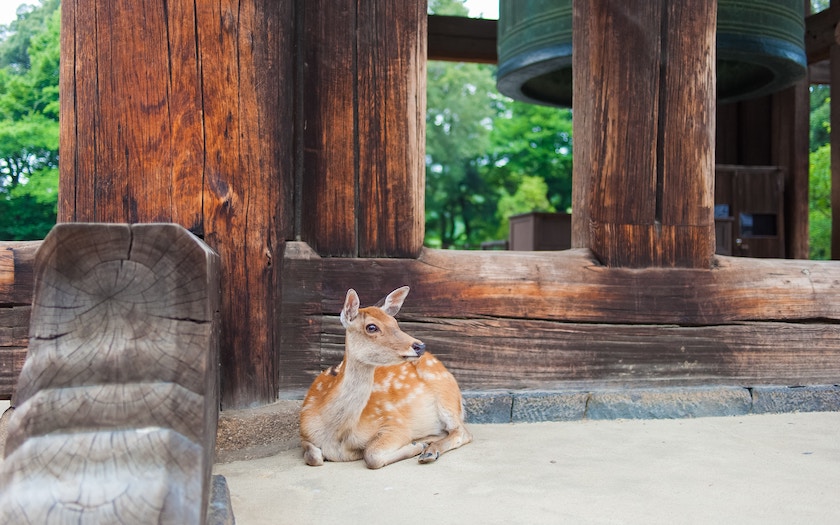
Nara is famous for its beautiful shrines, temples and free-roaming deer. Just make sure to feed these gorgeous creatures deer crackers only, and remember that they are wild animals.
These are just two examples. The incredible wildlife you can see in Japan also includes bears, whales, dolphins, giant salamanders, sea eagles, fish owls, mobula rays, hammerhead sharks, sea turtles and cranes. For a detailed guide, read A Wildlife Tour of Japan.
Give back to off-the-beaten track communities
One of the tenets of eco-tourism is avoiding over-tourism and choosing to visit less popular places. Rather than joining the crowds, why not visit smaller towns and communities that are arguably more authentic (and definitely quieter), and which benefit directly from your visit? For example, you could visit Kamikatsu, Japan's zero-waste town; Tsumago, where cars are kept off the main street during the day so it feels like stepping back in time; or Aizuwakamatsu, the 'samurai city,' known for its history. You can reach Aizuwakamatsu by taking a Yamabiko train along the JR Tohoku Shinkansen from Tokyo to Koriyama Station, then transferring to the JR Ban'etsu-sai Line to Aizu-Wakamatsu Station.
Don’t Forget
Trains are officially one of the most eco-friendly and sustainable public transport and you can get unlimited travel with the Japan Rail Pass.
You can reduce your carbon footprint even further by travelling around a single area of Japan, such as Kansai, and by buying a regional pass.
Visitors to Japan are often surprised to learn how difficult it is to find public rubbish bins. Recycling is taken very seriously with bins next to cash registers in many shops. However, public bins or trash cans aren’t common, so people simply take their rubbish with them.
In the spirit of eco-tourism, try to avoid or reduce the use of single-use plastics while travelling in Japan. For example, take a refillable water bottle or buy a set of reusable chopsticks.
If it’s your first time in Japan, make sure you read our Top 10 Tips for First-Timers in Japan, which includes advice on how to respect the local culture and customs.
FAQs
1. What is ecotourism?
Ecotourism is responsible travel to natural areas that conserves the environment, sustains the well-being of local people, and involves education and interpretation. In practice it also means supporting local communities, respecting local cultures, and minimising the impact of your visit.
2. Why is train travel considered eco-friendly in Japan?
Rail travel produces far lower carbon emissions per passenger than flying or driving — usually only a small fraction of the CO₂ of an equivalent flight. In Japan the shinkansen runs on electricity, and a JR Pass makes it easy to cross the whole country by train instead of taking internal flights.
3. What are Japan's UNESCO natural World Heritage sites?
There are five: Shirakami-Sanchi and Yakushima (both 1993), Shiretoko (2005), the Ogasawara Islands (2011), and Amami-Ōshima, Tokunoshima, northern Okinawa and Iriomote Island (2021), the last of which was recognised for its exceptional biodiversity.
4. How many national parks does Japan have?
Japan currently has 35 national parks, ranging from the drift ice and brown bears of Hokkaido to the coral reefs of Okinawa.
5. How can I see wildlife responsibly in Japan?
The most sustainable approach is to observe animals in their natural habitat — for example in the national parks — and to use certified guides or pay park fees that support conservation. Popular experiences include the snow monkeys of Jigokudani, the deer of Nara, and winter cranes and sea eagles in Hokkaido.
Daniel -San
Daniel-San, is a household name at JRPass.com. Daniel-san has shared his rich travel experience for nearly 10 years on the community forum. Ask him for anything related to travel in Japan!


 English
 Deutsch
 Français
 Italiano
 Nederlands
 Português
 日本語
日本語 한국어
한국어 简体中文
简体中文 繁體中文
繁體中文





.png)