Japanese culture may appear to have many etiquette rules for visitors. However, these customs are deeply ingrained into the community, and are now second nature for those who live there. Luckily, the Japanese are known for their hospitality and gratitude, and are often forgiving of travelers who aren’t accustomed to their ways.
Knowing the simplest of rules will make traveling in Japan a breeze. These rules are in place to avoid offending anyone, and understanding the basic etiquette shows admiration for their culture. As you are traveling, either navigating Japan’s railway system or walking through the streets to your next destination, a general rule is to treat everyone kindly.
In Japan, everything is done with respect and grace, which is evident in dining experiences, since dining is frequently a social event. Whether you are dining in a Japanese home, eating out at a restaurant with friends, or attending a business lunch, several Japanese etiquette rules can ensure you have a positive, relaxing, dining experience.
Pre-Meal Etiquette
There is a set of rituals that happen before eating a meal in Japan. These rituals can set the bar high for the rest of the meal, especially when it comes to Japanese business meetings, which call for the highest forms of etiquette.
Additionally, men should wear a jacket and tie at expensive restaurants, while women should wear dresses and skirts. Though they are not illegal, tattoos are better left covered in Japan, as they are linked to illegal activity.
Greeting Etiquette
Bowing is one of the biggest etiquette rules in Japan and is customary when greeting people. Before meals, offering a bow the correct way can speak volumes to how the rest of the meal will go. When bowing, remember these key things:
- Keep your back straight;
- Look at a spot on the ground about a foot in front of you;
- Bend at the waist while inhaling;
- Place your hands lightly on your thighs. Do not bring your hands together at chest level.
Oshibori Etiquette
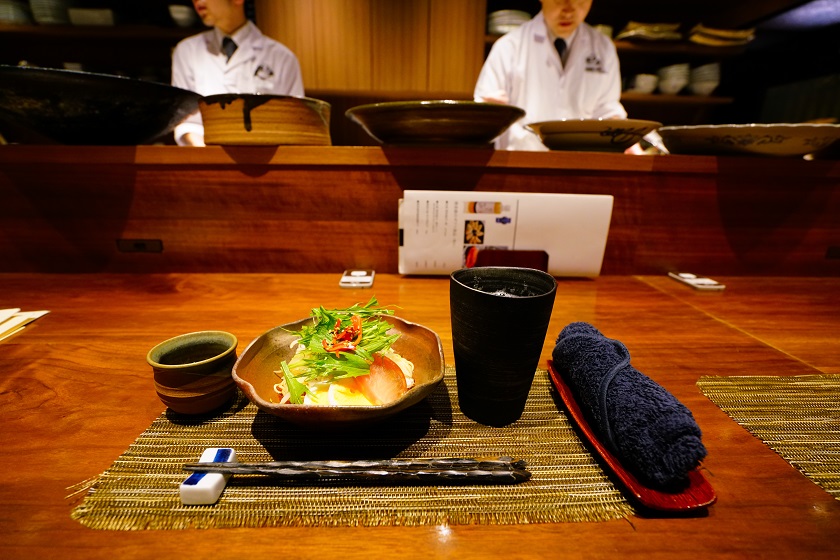
An Oshibori is a towel — hot or cold depending on the season — that is offered so that you can clean your hands. Many visitors think this towel is used on their face and neck, but this is a big faux pas. This towel is specifically used for cleaning your hands before and throughout the meal. This amenity is often featured in restaurants and is rolled or folded, handed to a customer on a tray.
Etiquette During the Meal
Travelers will find that throughout the meal there is an etiquette structure. This structure is found when visiting a Japanese home as well as most restaurants. Though many Japanese people are forgiving and understanding towards visitors, some actions can be deemed immature and inappropriate to other diners.
Chopstick Etiquette
Chopstick etiquette is a common issue for travelers, not only because they can be difficult to use, but also because many rules surround the proper use of them. Unlike a fork and knife, chopsticks shouldn’t touch the inside of your mouth. Instead, they should pass the food to your mouth. This concept also means that you should avoid sucking on or licking your chopsticks, as it could portray immaturity.
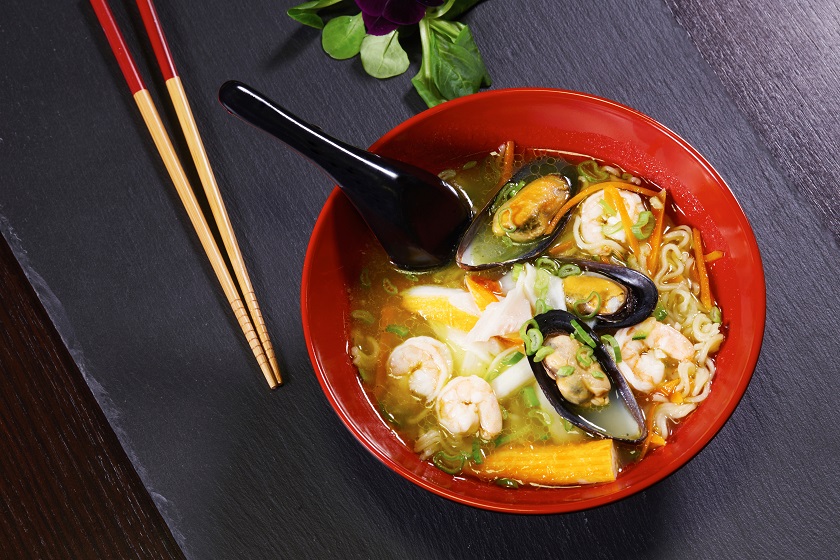
Chopsticks also signify whether you are still eating or are finished with your meal. Leaving chopsticks on the table will tell waiters that you are still eating. If you are finished, you should place your chopsticks together and sideways across the plate or bowl. Most restaurants will provide a “hashioki,” or chopstick holder to rest your chopsticks on so they don’t get the table dirty or roll-off onto the floor.
Other chopstick rules include:
- Do not point at food or people with your chopsticks;
- Try not to pass food with your chopsticks. If there are no serving utensils, use the bigger end of the chopsticks to pass food to your plate;
- Do not play with them or rub them together;
- Do not stab pieces of food;
- Do not leave chopsticks standing vertically in a bowl or cross them in an “X” shape. This symbolizes death;
- Elders and senior members at the table should lift their chopsticks first.
How to Place Your Chopsticks When Done Eating
This is probably the question travellers ask most often, so let's answer it clearly and warmly.
In Japan, the way you set down your chopsticks signals where you are in the meal. There's no need to think about it constantly — once you know the basic idea, it becomes second nature.
Between Bites
When pausing during your meal, you have three lovely options:
-
On the hashioki (chopstick rest). Most restaurants provide a small ceramic, wooden or glass rest — sometimes shaped like a leaf, a fish, or a tiny pillow — placed to the left of your bowl. Lay your chopsticks parallel on the rest with the tips pointing left.
-
Across the bowl or plate. If there's no rest, it's perfectly fine to lay your chopsticks neatly across the rim of your bowl or plate, again with the tips pointing left.
- On the chopstick wrapper (if disposable). For waribashi (disposable wooden chopsticks), you can fold the paper wrapper into a small mountain shape and use it as a makeshift rest. It's a nice little gesture that hosts notice.
When You're Finished
When your meal is done, the signal is gentle and simple: place your chopsticks together, parallel, and resting either on the hashioki or laid across the bowl with the tips pointing left. This tells your server (without anyone having to say a word) that you're finished and the dishes can be cleared.
For disposable chopsticks, slide them back into the paper wrapper they came in, and fold the open end. This is the traditional way of saying "I'm done, and thank you."
After Eating Ramen Specifically
Ramen has its own gentle convention. Once you've finished your bowl:
- Place your chopsticks parallel across the rim of the ramen bowl, with the tips pointing left
- If there's a ceramic spoon (renge), place it inside the bowl or alongside your chopsticks on the rim
- If you had disposable chopsticks, slide them back into the wrapper as above
That's it — no complex sequence, just a quiet, neat finish to your bowl.
The Two Things Worth Avoiding
Two gestures carry strong cultural meaning in Japan and are worth knowing simply because they're linked to funeral traditions, not table manners:
-
Don't stand your chopsticks vertically in a bowl of rice. This resembles incense offered at funerals.
- Don't pass food chopstick-to-chopstick with someone else. This echoes a step in funeral cremation rites.
If you ever do either of these by accident, no one will react dramatically — your hosts will simply smile, correct it gently, and the meal will move on.
Drinking Etiquette
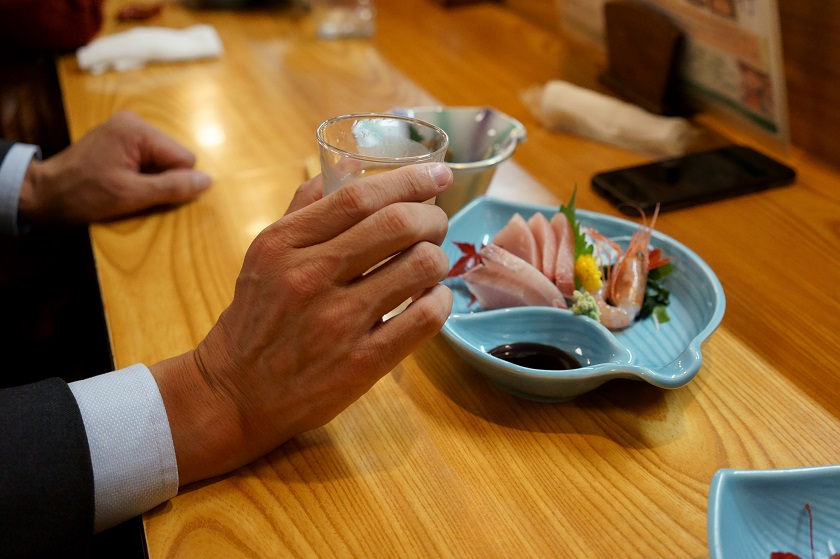
If you are looking to have a drink with dinner, you would be correct in assuming there are also certain etiquette rules surrounding beverages. The number one rule for drinking in Japan is to never drink alone. You must always wait for everyone to be served before even touching your drink. Once everyone is served, someone will offer a “kampai” which means “cheers” in Japanese. If you want to make a good impression, it is considered good manners to pour someone else’s drink before yours. Other drinking rules include:
- Leave your drink full if you don’t want refills;
- It is polite for everyone to drink the same drink for the first round;
- The glass of the most senior person should be raised the highest in cheers;
- When your drink is being poured, hold your glass with both hands.
Eating Etiquette
There is an array of eating protocols to be aware of before beginning a meal in Japan. Many of them revolve around the idea of not wasting food. Before plating yourself, make sure to start the meal by saying “Itadaki-masu,” which means “I gratefully receive.” After, you may begin dishing up. Remember to only take what you think you will eat, as leaving food on your plate is considered wasteful and impolite. Other dining rules include:
- Do not dump soy sauce on your food. Instead, pour a small amount of sauce in a bowl and dip your food into it;
- You may sip directly from a bowl if it contains ramen or soup. You can even slurp loudly to show your appreciation;
- Make sure to clean your plate;
- Never raise your food above your mouth;
- Do not try to catch falling food;
- Return all dishes to how they were at the start of the meal;
- Do not blow your nose at the table.
Post-Meal Etiquette
There are even rules for how to conduct yourself after a meal. End your meal with the phrase “gochisōsama deshita,” which means “Thank you for the feast.” If you used disposable chopsticks, make sure to place them back in their wrapper and fold the end.
Paying the Bill
Paying the bill can happen a few different ways. To signal for the bill, cross one index finger over the other to create an “X.” This is the standard sign for “check please.” You may also say, “okanjo kudasai,” which also means “check please.”
Usually, the person who invited people out to eat pays the bill. This reinforces their culture of hospitality and gratitude. It is also very common for a party to split the check. This custom is called betsu-betsu and is common when dining out with friends. If you are dining with a person of higher social status, they will typically foot the bill.
Tipping
Tipping is not common nor expected in Japanese culture. Many servers will think you left forgotten money and run after you to return it. It may be uncomfortable, but tipping in Japan adds unnecessary confusion to your dining experience.
Dining should be a relaxing experience, and knowing these etiquette rules will ensure that your experience will be a good one. Try not to worry about messing up these rituals — as stated before, the Japanese understand that travelers will not know every single rule. However, if you are worried about making a mistake, consider investing in a mobile hotspot device rental, which provides internet access wherever you travel in Japan, so you can research different customs. Oftentimes though, your hosts will laugh off your mistakes and teach you the correct way.
Quick Dos and Don'ts
A simple summary for reference at a glance.
Dos:
- Do say itadakimasu before the meal and gochisōsama deshita after
- Do rest your chopsticks on the hashioki or across your bowl, tips pointing left
- Do wait until everyone has been served before drinking, then say kampai
- Do pour others' drinks before your own, and hold your glass with both hands when receiving
- Do slurp noodles — it shows enjoyment and is genuinely welcomed
- Do try to finish what's on your plate
- Do say "gochisōsama deshita" to your server as you leave
Don'ts:
- Don't stand chopsticks vertically in your rice bowl
- Don't pass food chopstick-to-chopstick with someone else
- Don't pour soy sauce directly on your food (use the dipping dish)
- Don't tip — a warm thank-you is the gold standard in Japan
- Don't worry about getting everything perfect on day one — you're learning, and that's appreciated
Frequently Asked Questions
1. How do I place chopsticks when I'm done eating in Japan?
Place your chopsticks together, parallel, with the tips pointing to your left — either on the hashioki (chopstick rest) if one is provided, or laid neatly across the rim of your bowl or plate. For disposable chopsticks, slide them back into the paper wrapper they came in. This is the gentle signal to staff that you've finished your meal.
2. How do I rest my chopsticks between bites?
The same gentle placement works whether you're pausing or finished. Lay them parallel on the hashioki or across the rim of your bowl, tips pointing left. If you're at a casual spot and there's no rest, folding the chopstick paper wrapper into a small mountain shape makes a lovely makeshift rest.
3. How do I place chopsticks after eating ramen?
Lay them parallel across the rim of the ramen bowl with the tips pointing left. If you used a ceramic spoon (renge), you can place it inside the bowl or alongside your chopsticks on the rim. For disposable chopsticks, slide them back into the paper wrapper to finish.
4. What does it mean to stand chopsticks upright in rice?
Standing chopsticks vertically in rice resembles incense offerings at Japanese funerals, so it's a gesture that carries a strong association with death and is best avoided at the table. If you do it accidentally, no one will be upset — they'll simply correct it gently. Just lay them across your bowl or on the chopstick rest instead.
5. Do I need to tip in Japan?
No — tipping is not part of Japanese restaurant culture. Service is included in the price, and leaving extra money can cause confusion (servers often run after diners to return what they assume is forgotten cash). The most appreciated thank-you is a warm gochisōsama deshita on your way out.
6. What if I can't use chopsticks?
Don't worry about it at all. Many restaurants — particularly Western-style places, family restaurants, and most tourist-frequented spots — have forks and spoons available on request. A simple "Sumimasen, fōku o kudasai" ("Excuse me, a fork please") will be met with a smile. Many travellers also find their chopstick skills improve dramatically within their first few meals.
7. What should I say at the start and end of a Japanese meal?
Before eating, say "itadakimasu" ("I gratefully receive"), often with hands together in a small thanks. At the end of the meal, say "gochisōsama deshita" ("thank you for the feast"). These two phrases bookend most Japanese meals beautifully and are always appreciated when said by visitors.
.png)