Deutsch
 Español
 Français
 Italiano
 Nederlands
 Português
 日本語
日本語 한국어
한국어 简体中文
简体中文 繁體中文
繁體中文


If you're planning a trip to western Kyushu, the Nagasaki Shinkansen — officially called the Nishikyushu Shinkansen — is the fastest and most comfortable way to reach Nagasaki. Launched in September 2022, it cuts the journey from Fukuoka down to about 90 minutes and is fully covered by the Japan Rail Pass.
Whether you're heading to Nagasaki for a day trip or building a longer Kyushu itinerary, this guide explains exactly how the line works, what the train is like, and how to use it as a launchpad for exploring the rest of the island.
At a Glance: Key Facts
Official name: Nishikyushu Shinkansen (West Kyushu Shinkansen
Train name: Kamome (かもめ)
Route: Takeo-Onsen → Nagasaki (Shinkansen section)
Full journey: Hakata → Takeo-Onsen (Limited Express) → Nagasaki (Shinkansen)
Total travel time: ~90 minutes (Hakata to Nagasaki)
Shinkansen section only: ~23–30 minutes (Takeo-Onsen to Nagasaki)
Unreserved fare: ¥5,960 (Hakata → Nagasaki)
Reserved fare: ¥6,490 (Hakata → Nagasaki)
Seat classes: Ordinary Class, Green Class (1st Class)
JR Pass covered?: Yes — fully covered, no surcharge
Regional pass covered?: JR Kyushu Pass, JR Northern Kyushu Pass
Table of contents:
The opening of the Nagasaki Shinkansen
The Nishikyushu Shinkansen has been a long time coming. Plans to connect Nagasaki to Japan's bullet train network date all the way back to 1973, and after decades of political debate and construction delays — including a major setback caused by the Kumamoto earthquake of 2016 — the line finally opened on September 23, 2022.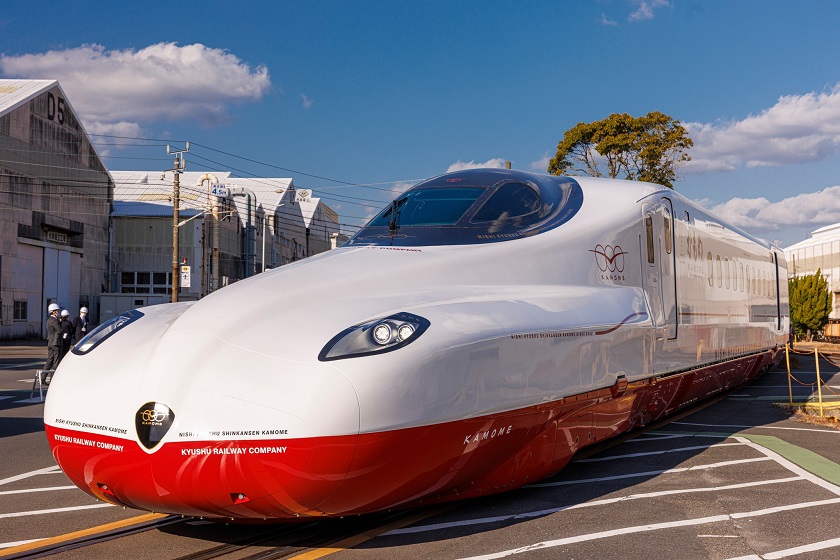
The Shinkansen itself runs between Takeo-Onsen Station and Nagasaki Station — a 66 km stretch that takes around 23–30 minutes. To travel from Fukuoka's Hakata Station, you first take the Limited Express Relay Kamome (or the Midori service) to Takeo-Onsen, then cross the platform and board the Shinkansen Kamome for the rest of the journey.
The transfer is designed to be seamless — both trains arrive and depart on opposite sides of the same platform, so you simply step across. Total journey time from Hakata to Nagasaki is around 90 minutes, down from roughly two hours before the line opened.
A note on the future: Plans to extend the line further — connecting Takeo-Onsen to Shin-Tosu and creating a fully continuous Shinkansen route from Fukuoka — are still under political discussion. Saga Prefecture has opposed the extension due to the costs and limited benefit for local commuters, so the full link remains unconfirmed for now.
The Kagome Train
The bullet train that operates the Nishikyushu Shinkansen is called the Kamome (かもめ), meaning seagull in Japanese — a nod to Nagasaki's coastal character. JR Kyushu has used the Kamome name for fast train services on this corridor since as far back as 1937, so the new Shinkansen carries on a long-running tradition.
The train runs in a 6-car formation and offers two classes of travel:
-
Ordinary Class (standard) — rows of three seats on one side and two on the other, similar to most Shinkansen across Japan; comfortable and well-suited for the short journey
- Green Class (first class) — rows of two seats on each side, with wider, more plush seating and extra legroom; a good upgrade for those who want a more relaxed ride
The train holds 396 passengers in total, with reserved seating available in Cars 1 through 3. Seat reservations are free with a JR Pass — and we recommend booking ahead during busy periods like national holidays, cherry blossom season, and Golden Week.
Stations and fare information
The Nishikyushu Shinkansen stops at five stations between Takeo-Onsen and Nagasaki:
-
Takeo-Onsen — the transfer point from the Limited Express; a charming hot spring town worth an overnight stay if you have time
-
Ureshino-Onsen — another onsen (hot spring) town known for its skin-softening waters and green tea production; great for a spontaneous detour
-
Shin-Omura — a newer station built specifically for the Shinkansen; less of a destination, but useful for connections to Omura City
-
Isahaya — a gateway to the scenic Shimabara Peninsula and its famous castle
- Nagasaki — the final destination; a deeply historic city with a moving atomic bomb memorial, a scenic harbour, and one of Japan's oldest Chinatowns
Fares and Tickets
The standard unreserved fare for the full journey from Hakata to Nagasaki is ¥5,960, and a reserved seat costs ¥6,490.
If you're travelling with a Japan Rail Pass, the entire route is covered at no extra cost. The same applies to the JR Kyushu Pass and the JR Northern Kyushu Pass — so JR Pass holders simply need to make a free seat reservation and board.
Using the Japan Rail Pass on the Nagasaki & Kyushu Shinkansen
Good news for JR Pass users: the entire Nagasaki Shinkansen is included without any additional cost or limitations. The same applies to users of the JR Kyushu Pass and JR Northern Kyushu pass.
Seat reservations can be made for free using a pass. We recommend doing so during periods that are typically busy, including rush hour, national holidays, and special events.
Sample Trips: How to Use the Kamome in Your Itinerary
The Nishikyushu Shinkansen works best as part of a broader Kyushu loop. Here are three practical examples of how to fit it into your travel plans.
Sample Trip 1 — Fukuoka Day Trip to Nagasaki
Hakata → (Limited Express Relay Kamome, ~1h) → Takeo-Onsen → (Shinkansen Kamome, ~30 min) → Nagasaki
This is the simplest and most popular use of the line. Leave Hakata by 8:30am, arrive in Nagasaki before 10:00am, and you have a full day to visit the Atomic Bomb Museum, the Peace Memorial Park, and the hilltop views from Glover Garden before heading back in the evening. Fully covered by the JR Pass.
Sample Trip 2 — Nagasaki + Onsen Overnight via Ureshino
Hakata → Nagasaki (Day 1) → Ureshino-Onsen (overnight) → Hakata (Day 2)
After your first day in Nagasaki, board the evening Kamome back toward Takeo-Onsen and stop off at Ureshino-Onsen for the night. The town is well known for its milky alkaline springs and is dramatically less crowded than better-known onsen destinations. Head back to Hakata the following morning on the Limited Express Relay Kamome.
Sample Trip 3 — Kyushu Loop (Fukuoka → Nagasaki → Kumamoto → Fukuoka)
Hakata → Nagasaki → Hakata → Kumamoto → Hakata (or in reverse)
For a fuller Kyushu itinerary of 4–5 days, combine the Nishikyushu Shinkansen to Nagasaki with the Kyushu Shinkansen south through Kumamoto and Kagoshima. All legs are covered by the JR Pass or the JR Kyushu Pass. This loop showcases Kyushu's most historically significant cities and makes excellent use of a regional pass.
You're Good to Go
The Nishikyushu Shinkansen has made Nagasaki significantly more accessible than it was just a few years ago, and it's one of the most scenic and enjoyable short Shinkansen rides in the country. With full JR Pass coverage, free seat reservations, and a seamless cross-platform transfer at Takeo-Onsen, the logistics are genuinely straightforward. Book your seat when you activate your pass, and you're all set.
.png)