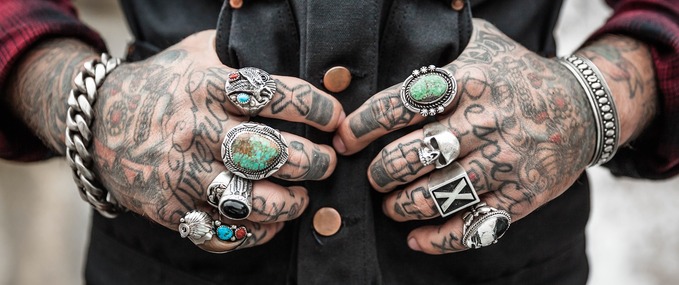
If you have tattoos and you're planning a trip to Japan, you've probably wondered whether your ink will cause problems. The short answer is: not as much as you might think, but knowing the context makes the experience far more enjoyable. This guide is for tattooed travelers who want to understand Japanese attitudes toward body art, know which venues to expect restrictions at, and feel fully prepared to make the most of their trip without any unwelcome surprises.
Are Tattoos Illegal in Japan?
While some view tattoos as an art form, the Japanese government, on the other hand, does not. Although they may not be illegal, tattoos are often associated with the Yakuza, a Japanese gang that covers their entire body with tattoos.
Tattoo Ban
The laws of tattooing in Japan have fluctuated throughout the centuries. In 1872 tattoos of all kinds were prohibited to help give an appearance of civilization and sophistication throughout the country. This prohibition resulted in an increase in arrests and tattoo artists moving their shops underground. It wasn’t until 1948 that tattooing became legal again, however, the stigma around the art has remained.
Responding to an inquiry by the National Police Agency, the Ministry of Health, Labour and Welfare (MHLW) declared that “coloring skin by injecting colors into it with a needle” is a medical act. This means that anyone who participates in the act of tattooing — cosmetic or self-expression — without a medical license violates the Medical Practitioner’s Act.
In 2015 Japanese tattoo artist Taiki Masuda was arrested for violating the Medical Practitioner’s Act. Police visited his tattoo parlor in relation to a criminal case against a pharmacy where Masuda was listed as a client. “Becoming a medical doctor costs a lot of time and money,” says Masuda. “It is ridiculous to think that you’d get a medical license to become a tattoo artist.
He was charged with a fine of 300,000 yen. He decided to appeal, ultimately losing his case, but was fined only half of the original amount. This is a fair deal considering violating the act can result in facing 3 years of prison time or a fine of up to 1 million yen.
If able to, covering any visible tattoos is highly recommended. In the past, it was easier for business owners to turn tattooed people away, whether they lived there or not. Now, with the increase of tattooed travelers and natives, it is becoming more difficult to deny them entry without receiving negative feedback from the public. Researching proper Japanese business etiquette can help people get a better understanding of what to expect when faced with a business that bans tattoos.
A Landmark Legal Ruling You Should Know About
The legal story around tattoos in Japan has evolved significantly, and the current picture is more positive than many older articles suggest.
For years, a Ministry of Health, Labour and Welfare ruling classified tattooing as a medical act, meaning that artists who practiced without a medical license were technically in violation of the Medical Practitioner's Act. This led to the high-profile prosecution of Osaka tattoo artist Taiki Masuda, who was charged after police visited his studio in 2015.
Masuda challenged the ruling all the way to Japan's highest court — and in September 2020, the Supreme Court issued a landmark decision: tattooing does not constitute a medical procedure. The court stated that tattoos require artistic skills different from medicine, and that it cannot be assumed that doctors perform the act exclusively. Masuda's fine was definitively cleared, and tattoo artists in Japan now have clear legal standing to practice their craft without a medical license.
After Masuda's acquittal was finalized, the Japan Tattooist Association — which had been set up during the trial — gained momentum, with more people entering the profession now that the threat of prosecution had been removed.
For travelers, the practical takeaway is straightforward: tattooing is legal in Japan, and getting a tattoo there is no longer a legal gray area for the artist. The social picture is more nuanced — but it too is shifting.
Why Tattoos Carry Stigma in Japan
Understanding the "why" behind tattoo restrictions makes navigating them considerably easier, and less frustrating.
In Japan, the stigma around tattoos is rooted primarily in their historical association with the Yakuza, Japan's organized crime syndicates. For decades, full-body tattoos were strongly associated with gang membership, a way to signal lifelong loyalty and willingness to endure pain for the group. The Yakuza's presence in Japan has declined dramatically, from a peak of around 80,000 members to roughly 11,000 in recent years. Still, the cultural association has been slower to fade — particularly among older generations and traditional institutions.
It's worth keeping this in perspective: when venues ask guests to cover tattoos or decline entry to heavily tattooed visitors, it's rarely a personal judgment. Tattoo policies in Japan reflect community comfort levels and a desire to balance tradition with hospitality — not personal discrimination against individual guests. Approaching restrictions with patience and good humour goes a long way.
The History of Tattoos in Japan
Japan's relationship with tattoos stretches back thousands of years — and is far richer than the Yakuza association alone.
Historians have found clay figurines from the Jōmon Period (roughly 10,500 BC – 300 BC) bearing markings that represent tattoos or other body modifications. Tattooing as a form of punishment was first recorded in 720 AD, with specific markings placed on the forehead to mark those who had committed serious crimes.
By the 17th century, punishment tattooing fell out of practice, but decorative tattooing — known as irezumi — flourished during the Edo Period (1603–1867). It developed into a sophisticated art form closely linked to traditional woodblock prints (ukiyo-e), with elaborate full-body designs that are now celebrated worldwide.
Decorative tattooing was banned in 1872 during the Meiji era, as the government sought to project a modernized image to the outside world. This pushed tattoo culture underground — and it was during this period that the Yakuza's association with elaborate tattoos became entrenched. Tattooing was eventually legalized again in 1948, but the stigma that developed during those decades proved remarkably durable.
Traditional hand-poked Japanese tattoos, known as horimono or wabori, have histories stretching back centuries and are an art form linked to traditional Japanese woodblock prints. When horimono first became popularized in the 1800s, they did not carry the same negative reputation they do today. That heritage is increasingly recognized — as the Supreme Court's 2020 ruling acknowledged.
Enjoying Onsen With Tattoos
Onsen are one of the true highlights of any trip to Japan — and tattooed travelers absolutely can enjoy them. The key is knowing your options.
Tattoo-friendly onsen are more plentiful than many travelers realize. In recent years, Japan's tourism boom and evolving attitudes toward body art have prompted a gradual shift, with more onsen relaxing their policies to recognize that many overseas visitors have tattoos for purely aesthetic or cultural reasons.
Some standout destinations worth knowing:
Kinosaki Onsen (Hyogo Prefecture) is a particular gem for tattooed visitors — this 1,300-year-old hot spring village welcomes tattoos at all seven of its public bathhouses, making it an exceptional choice for travelers who want a fully authentic onsen experience without any worry.
Beppu (Oita Prefecture, Kyushu) is widely considered the most welcoming city in Japan for tattooed onsen visitors, with a high concentration of public facilities that openly accommodate international guests.
Dogo Onsen (Matsuyama, Ehime) — one of Japan's oldest and most storied bathhouses — welcomes all visitors, with tattoos accepted across all three of its bathhouses.
Private baths (kashikiri-buro or kazoku-buro) are available at many ryokan and onsen facilities and are perhaps the most relaxed option of all. These are private rooms with a dedicated hot spring bath that you rent by the hour — in a private onsen, tattoos are completely acceptable with no exceptions. They're also a lovely option for couples or small groups regardless of tattoo status.
If you're unsure about a specific venue, contact the onsen in advance to describe your situation and ask whether entry is possible; some will decline, but others will welcome you with no further questions asked.
Practical Tips for Tattooed Travelers
While tattoos are not illegal, they can prevent people from getting the full Japanese experience. When using public transportation in Japan, such as trains, tourists with visible tattoos will want to keep in mind that their ink may be offensive to some of the locals. With this in mind, tourists may want to get ready for their Japan vacation by:
Being Prepared: It can be tough traveling to another country with a language barrier. Having access to unlimited Wi-Fi can help tourists translate any misleading or confusing signs that show indications that people with tattoos are or are not allowed.
Covering Up Tattoos: There are many ways to hide tattoos. For example, wear clothing or jewelry that covers your tattoo (bracelets, scarves, long sleeves, pants, etc.), use bandages, wear a rash guard, or apply makeup to the area.
Talking About Your Tattoos Prior to Your Stay: If you plan on staying with a host family or Air BnB while in Japan, you may want to talk about your tattoos with them prior to your stay. This will ensure that you aren’t disrespecting any etiquettes that come along with visiting a Japanese home.
What to Know Before You Go
Visiting Japan with tattoos is absolutely manageable — and with a little knowledge, it needn't be a source of anxiety at all.
The essentials to carry with you:
Tattoos are legal in Japan, and the 2020 Supreme Court ruling settled any ambiguity around the practice itself. Social stigma remains in certain traditional settings, rooted in historical Yakuza associations, but it does not reflect how most Japanese people will perceive a foreign traveler.
Onsen, gyms, pools, and some beaches may have policies restricting visible tattoos — but tattoo-friendly alternatives exist across the whole country, and private bathing options are widely available.
Covering up with clothing, patches, or a rash guard is the simplest way to navigate any venue's policies without friction.
Attitudes are shifting, particularly among younger generations and in tourist-heavy areas, and the number of venues actively welcoming tattooed guests is growing year on year.
Conclusion
Japan is one of the most rewarding travel destinations in the world — its culture, food, landscapes, and train network are unlike anywhere else. Don't let questions about tattoos put you off planning the trip. Get informed, pack a few layers, and go enjoy it.
Ready to start planning? Use our JR Fare Calculator to map out your routes, explore our regional pass options if you're focusing on a specific part of Japan, or browse our Japan travel tips for everything else you need to know before you go.
D.J Thomson is a freelance journalist, blogger, and experienced traveller who has worked for a wide range of newspapers, magazines, websites, international businesses, and other global organisations. Based in the UK, D.J has more than 20 years' experience as a professional writer.


 Deutsch
 Español
 Français
 Italiano
 Nederlands
 Português
 日本語
日本語 한국어
한국어 简体中文
简体中文 繁體中文
繁體中文