Loving those red torii gate tunnel images from Kyoto, but just can’t get down there? Never fear; Tokyo can deliver.
We went traipsing around town to find the top three photo spots to complete your holiday snap collection. The good news? You could see them all in one morning! Without further ado: our favourite torii gate tunnels in Tokyo…
Hie Jinja
Set atop a hill in Nagatachō, Hie Shrine is a green oasis surrounded by city buildings. And as one of Tokyo’s most important shrines, it’s no surprise that many people and businesses have donated these red gates for luck. To find the torii gates from inside the complex, turn right at the main hall, then follow the path to the left.
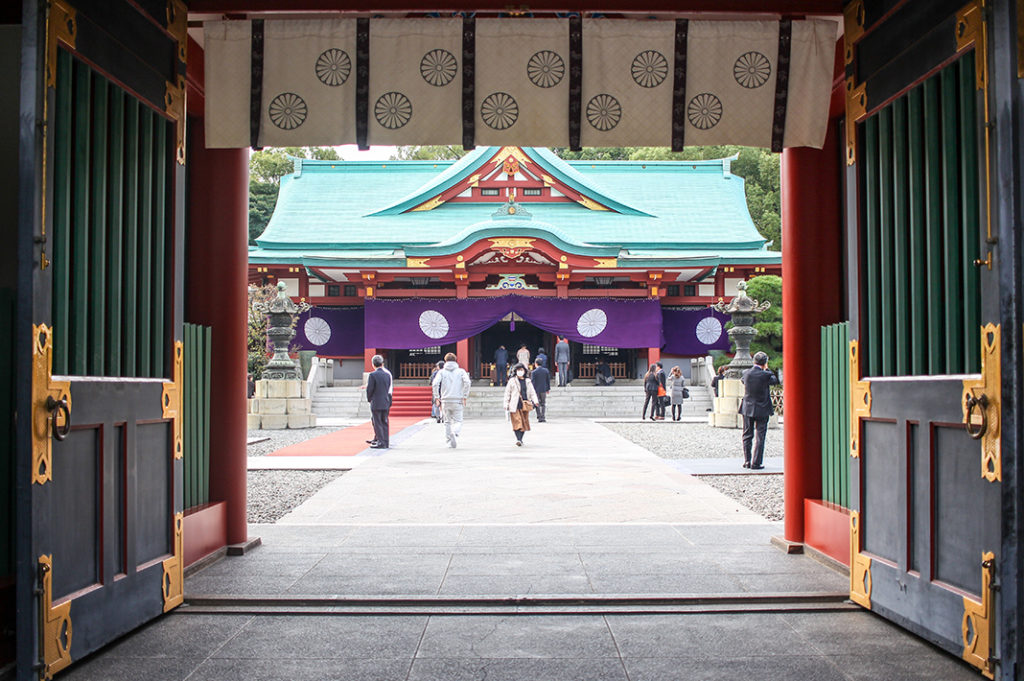
Turn right at the main hall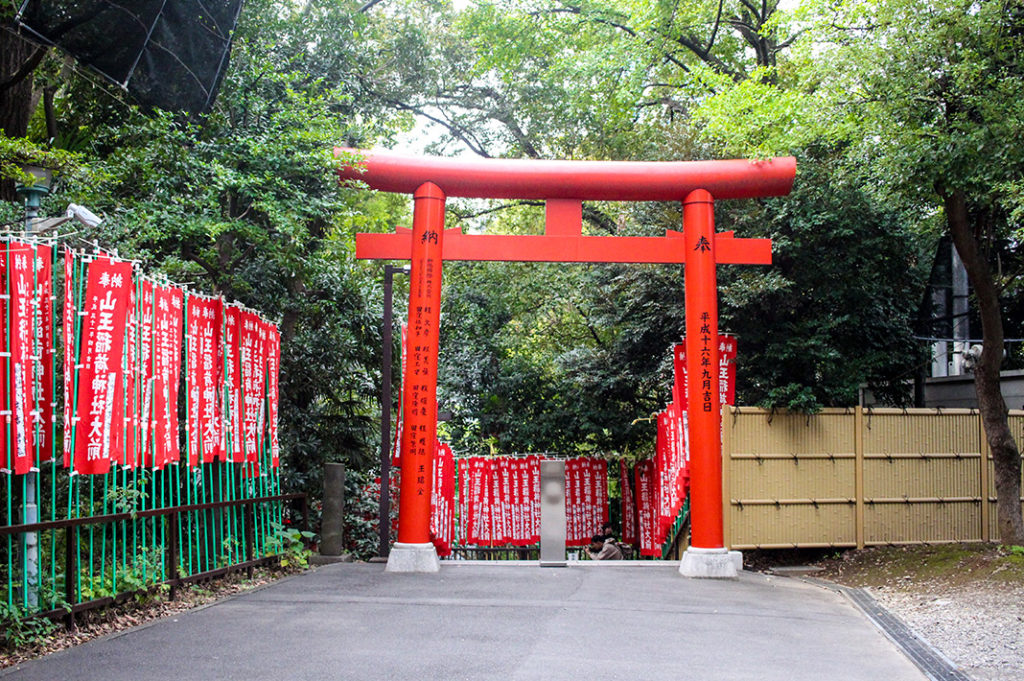
The entrance to the senbon torii
If you are outside of the grounds, you’ll want to find the West Entrance, which is over behind the Okamura Chair Museum. What you’ll find is a steep stone staircase flanked by tightly packed vermilion torii. This makes for a great photo from either end of the tunnel. During the day, you may need to wait your turn so try going early for lesser crowds.
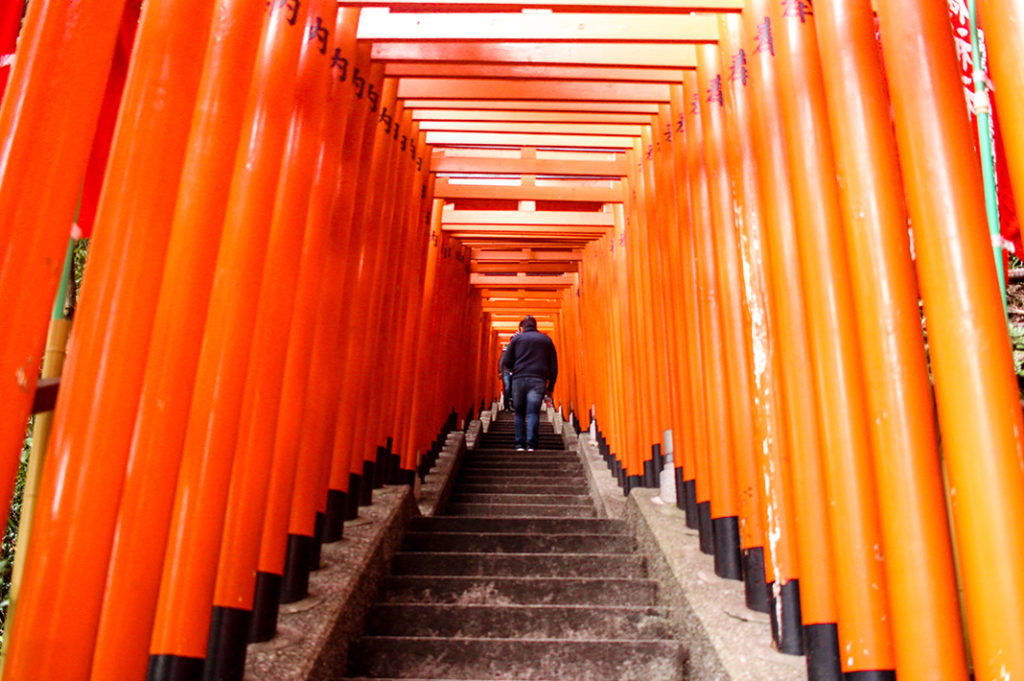
You can get there in a few minutes walk from either Akasaka Station, Akasaka Mitsuke Station, Kokkai-gijidoimae Station or Tameike-sannō Stations.
Address: 2 Chome-10-5 Nagatacho, Chiyoda City, Tokyo (link)
Open: 5:00a.m.–6:00p.m.
Nezu Shrine / Otome Inari Shrine
Nezu shrine is one of the oldest in town, dating all the way back to 1705. Though well known by locals, many tourists overlook this little backstreet gem. The grounds are open, peaceful and perfect for a little photography. Just after crossing the small bridge, take the path to the left and you’ll find the beginning of the torii gate path which leads to Otome Inari Shrine, a place for maidens to pray for marriage.
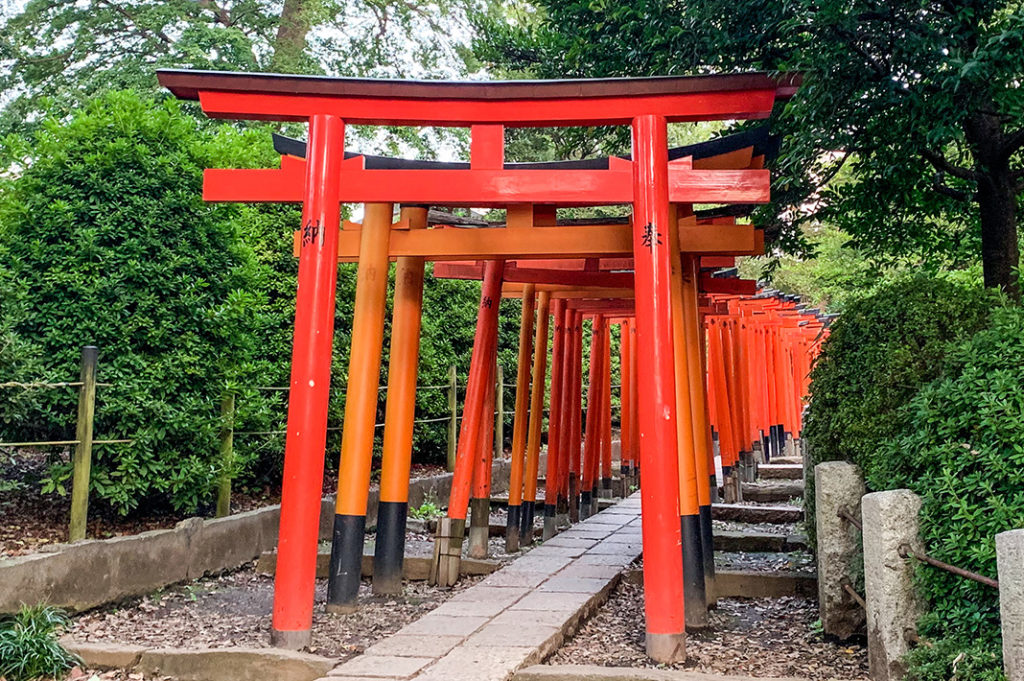
These gates have a different aesthetic to Hie Shrine—they’re a little weathered, a little crooked—and you may need to duck under some. And this is exactly what makes them so charming! 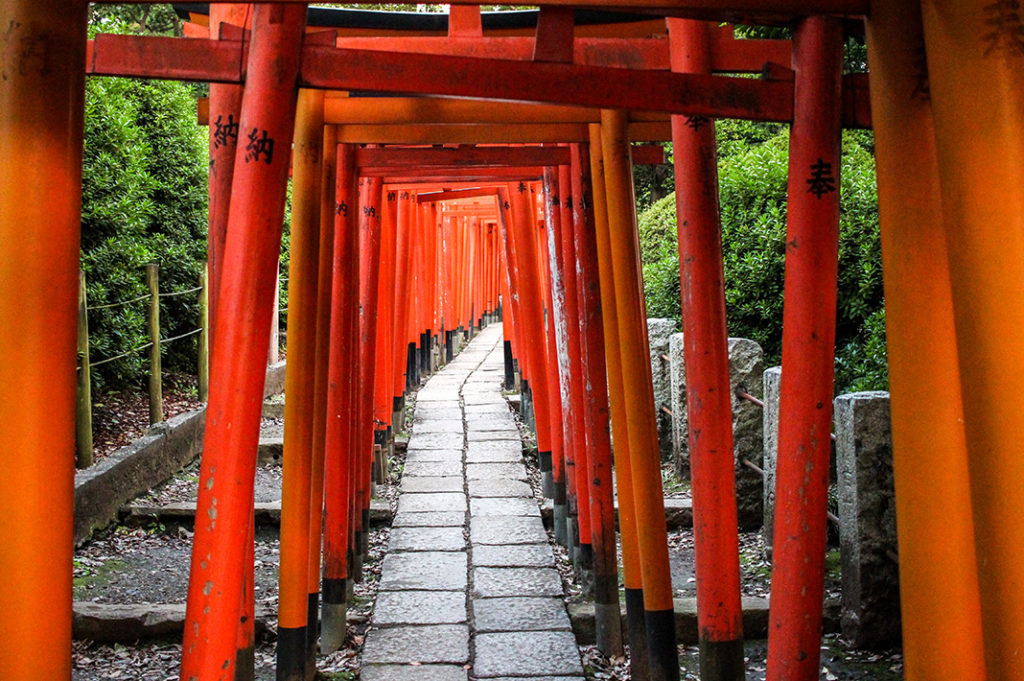
If you visit in April, you'll catch the Bunkyo Azalea Festival (tsutsuji matsuri), when around 3,000 azalea bushes across roughly 100 varieties form a colourful blanket over the hillside (in 2026 the festival runs throughout April). The shrine grounds themselves stay free and open from early morning, but note that during the festival the hillside azalea garden has its own entrance and a donation of roughly ¥500–¥1,000 — the price rises as the flowers reach their peak — with garden hours of about 9:00a.m.–5:30p.m. The blooms add a gorgeous extra element to your torii shots, though they also bring crowds, so head there early and favour a weekday over a weekend.
You can reach Nezu Shrine in 5 minutes from either Nezu station or Sendagi station (both on the Chiyoda line) or from Todaimae station (Nanboku line).
Address: 1 Chome-28-9 Nezu, Bunkyo City, Tokyo 113-0031 (link) Open: 6:00a.m.–5:00p.m., 7 days per week.
Hanazono Inari Shrine
Head into Ueno Park and make your way over to Hanazono Inari Shrine. This shinto shrine has a small red torii gate path, broken up into groups of around 10 gates, staggered over a few levels on the hill.
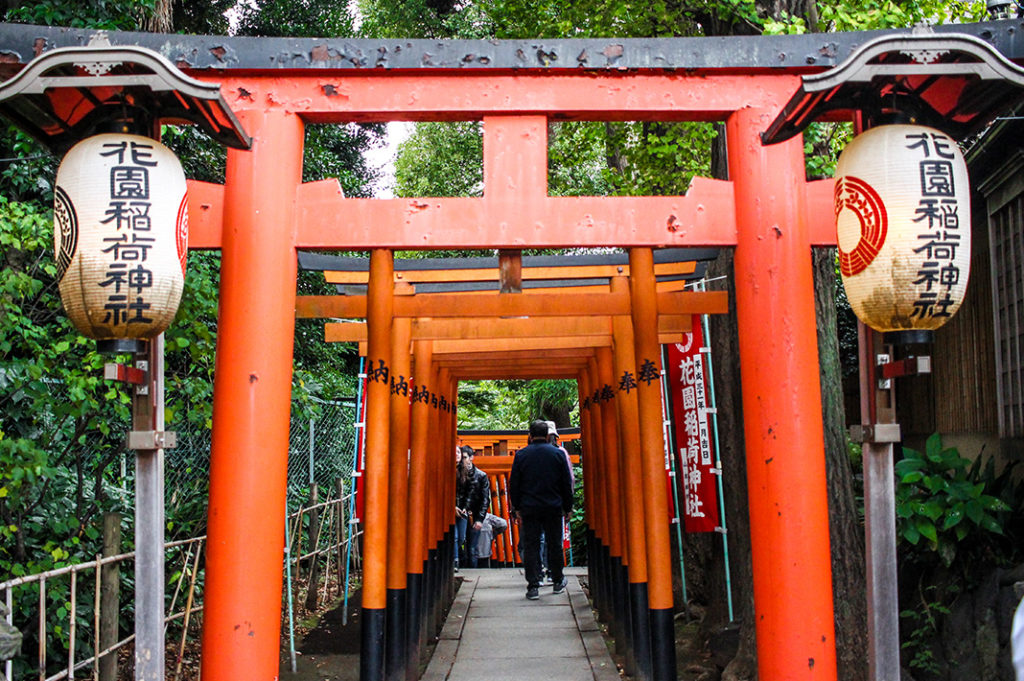
It’s not quite as visually impressive as the above two, but it’s certainly charming. If you don’t have much time in Tokyo, this might be a good option because there are so many other things to see and do around Ueno. For those visiting in cherry blossom season, the park becomes a sea of pink, which will no doubt interest the photographers out there. 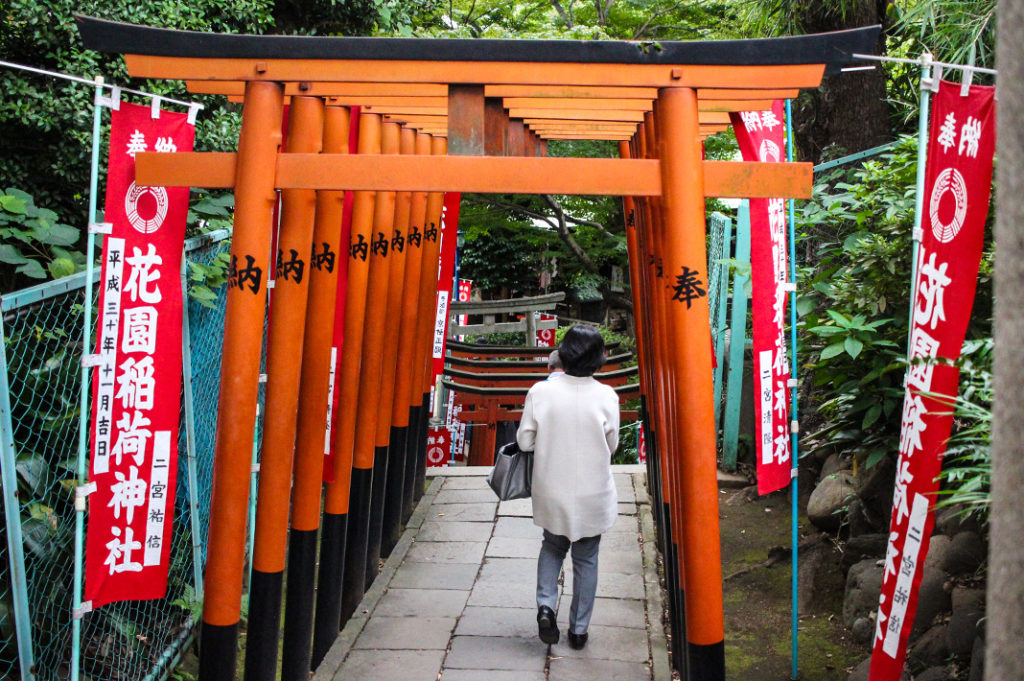
Hanazono Inari Shrine is a 5 minute walk from Ueno Station and is close to many other attractions within the park.
Address: 4-59 Uenokoen, Taito City, Tokyo 110-0007 (link) Open: 6:00a.m.–5:00p.m., 7 days per week.
While there are even more torii gate tunnels in Tokyo, these three should get you started with ample photo opportunities.
Plan your photo morning
A few practical notes to make the most of these spots:
-
Go early. All three are calmest first thing, before the queues build at the narrowest tunnels (Hie's staircase especially). Soft morning light flatters the vermilion, too.
-
Two clusters, one easy loop. Hie Jinja sits in central Nagatachō/Akasaka, while Nezu and Hanazono (Ueno) are up in the city's northeast and close to each other — so pairing Nezu with Ueno makes a natural half-day. Ueno is on the JR Yamanote line (covered by your Japan Rail Pass); Hie and Nezu are most easily reached on the Tokyo Metro.
- Mind the etiquette. These are active places of worship — step to the side of the path for photos, and avoid blocking the gates while others pray.
Bonus: a different kind of Tokyo photo — purikura
Done with shrines and want a sillier souvenir? Track down a purikura booth — Japan's beloved high-tech photo booths, a teenage staple since the 1990s. You'll find these Japanese photo booths in game arcades and malls across central Tokyo, especially around Shibuya, Harajuku, Ikebukuro and Akihabara, so there's usually one near wherever you're shooting. A session costs roughly ¥400–600 (bring ¥100 coins), and the machines automatically brighten your skin and enlarge your eyes before you cover the shots in digital stamps, then print a sticker sheet and send the photos to your phone.
One heads-up: solo men and all-male groups are sometimes turned away, as the booths cater mainly to a female clientele. For the full how-to — etiquette, the best photo-booth centres and step-by-step tips — see our complete guide to purikura photo booths.
Happy snapping!
This article was first published by Japan Journeys. Check Japan Journeys for deeper and unique insights into visiting Japan, including wellness, travel, cuisine and more. Follow on Instagram @japanjourneys.jp, and on Facebook at this link!
Frequently asked questions (FAQ)
1. Where can I photograph torii gate tunnels in Tokyo?
Three of the best are Hie Shrine in Nagatachō, Nezu Shrine (leading to Otome Inari Shrine) in Bunkyo, and Hanazono Inari Shrine in Ueno Park. All three have rows of vermilion torii and are easy to visit in a single morning.
2. Do I need to pay to see the torii gates at these shrines?
No, entry to all three shrines and their torii paths is free. The only exception is Nezu Shrine's hillside azalea garden, which charges roughly ¥500–¥1,000 during the April Azalea Festival; the torii path and main grounds remain free year-round.
3. When is the best time to photograph the torii gates?
Early morning, when the shrines are quietest and the light is soft. Weekdays are far less crowded than weekends, and at Nezu Shrine the azaleas peak around mid-to-late April.
4. Where can I find a purikura photo booth in Tokyo?
Purikura (Japanese photo booths) are found in game arcades and shopping malls across central Tokyo, particularly in Shibuya, Harajuku, Ikebukuro and Akihabara. A session costs about ¥400–600 in ¥100 coins. Note that solo men and male-only groups are sometimes refused entry.