The Hokkaido Shinkansen is the newest Shinkansen line in Japan, starting at Shin-Aomori where it connects to the Tohoku Shinkansen. From there it goes through the Seikan Tunnel to Hokkaido. The Hokkaido Shinkansen currently runs up to Shin-Hakodate-Hokuto station, with a future extension to Sapporo now expected around the end of the 2030s. The Hokkaido Shinkansen is covered by the JR Pass. It's also one of the most memorable rides in the country — the only Shinkansen that runs beneath the sea, carrying you from Tokyo to the port city of Hakodate in a little over four hours without a single change of train.
Table of contents:
Brief history of the Hokkaido Shinkansen
Plans for the Hokkaido (北海道) Shinkansen had been proposed in the early 1970's, back then the Japanese economy was booming, the Tokaido Shinkansen had recently been opened and money was flowing everywhere. Two plans for the Hokkaido Shinkansen were proposed, one going North of Sapporo and one East, with stations mentioned as far as Wakkanai and Nemuro.
Since the 1990's Japan's economy took a downturn and development of the Hokkaido Shinkansen was delayed. Finally, on March 26th 2016 the Hokkaido Shinkansen opened, reducing the travel time from Tokyo to Hokkaido from 7 hours to only a little over 4 hours.
The Hokkaido Shinkansen has become a modern feat of engineering by letting bullet trains run through the Seikan Tunnel, which connects mainland Japan to Hokkaido and is also the first time that the Shinkansen bullet trains run under the sea. At nearly 54 km, the Seikan Tunnel is the longest tunnel in Japan and one of the longest undersea rail tunnels in the world.
Train services on the Hokkaido Shinkansen
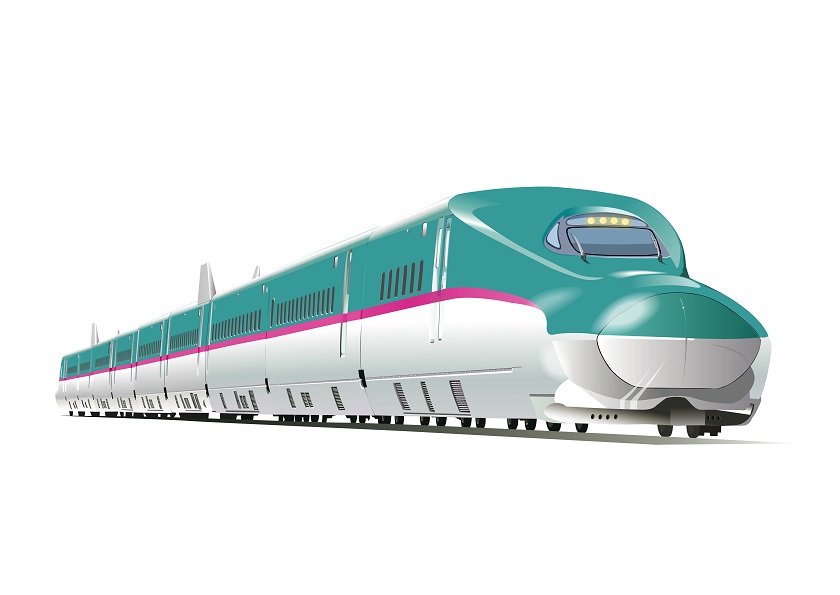
The Hayabusa Shinkansen on the Hokkaido Shinkansen
There are two train services on the Hokkaido Shinkansen. These are:
Hayabusa
The Hayabusa is the fastest Shinkansen service in Japan, running at up to 320 km/h. It's the main service on the Hokkaido Shinkansen, stopping only at the most important stations such as Sendai and Morioka on the Tohoku line before continuing past Shin-Aomori and through the Seikan Tunnel to Shin-Hakodate-Hokuto. The Hayabusa runs as the sleek green E5 series (JR East) or the near-identical H5 series (JR Hokkaido, easy to spot by its lavender-purple stripe). One thing to know before you travel: the Hayabusa is fully reserved — there are no non-reserved seats, so you'll need a seat reservation before boarding. The good news is that reservations are free with the JR Pass.
Hayate
Only slightly slower than the Hayabusa Shinkansen, the Hayate Shinkansen stops at all major stations between Tokyo and Shin-Aomori. A small number of Hayate services also continue to Shin-Hakodate-Hokuto on the Hokkaido Shinkansen line.
A quick note on your destination: the line's northern terminus, Shin-Hakodate-Hokuto, sits outside Hakodate itself. To reach the city centre, hop on the connecting Hakodate Liner local train for a ride of around 20 minutes — also covered by your JR Pass.
Can I use the JR Pass on the Hokkaido Shinkansen?
Yes, the JR Pass is valid on the entire Hokkaido Shinkansen and can be used on both the Hayabusa and Hayate services. Because the Hayabusa is fully reserved, just remember to pick up your free seat reservation before you board.
This is one of the routes where the pass really earns its keep. A one-way ticket from Tokyo to Shin-Hakodate-Hokuto costs roughly ¥23,000–24,000, and continuing on to Sapporo (transferring to the Limited Express Hokuto) pushes a one-way fare to around ¥27,000–28,000. Set that against a 7-day Ordinary JR Pass at about ¥50,000, and the maths speaks for itself: a single Tokyo–Sapporo round trip alone costs roughly the same as — or more than — the entire pass.
Note: fares and pass price are approximate and change with fare revisions and exchange rates.
Additionally, if you're focusing on northern Japan rather than the whole country, the JR East – South Hokkaido Pass is a regional alternative that also covers travel between Tokyo and Sapporo, and can work out cheaper for shorter trips.
It's a long ride, around four hours from Tokyo, which makes it the perfect excuse to pick up an ekiben (a station lunch box) before you board. Buy one at the station rather than expecting a trolley service, and enjoy it with the scenery.
Can I use the JR Pass on the Hokkaido Shinkansen?
The JR Pass is valid on the entire Hokkaido Shinkansen and can be used on both the Hayabusa and Hayate train services. It offers very good value going on this route, for instance a one way ticket Tokyo – Sapporo is ¥ 27,760, that’s almost the cost of a full 7-day JR Pass.
Additionally, the JR East – South Hokkaido Pass covers the JR Pass and includes travel all the way between Tokyo and Sapporo.
Green Class on the Hokkaido Shinkansen
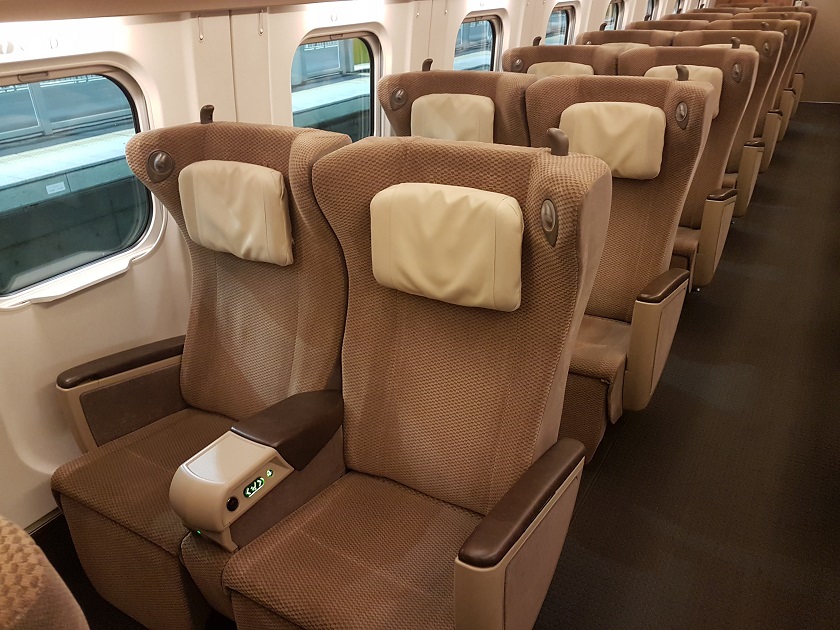
Green Class (or 1st Class) carriages are available on all Hokkaido Shinkansen trains. Trains operate a 2×2 seating plan in Green Class, while ordinary cars operate a 3×2 seating plan. Green seats come with extra comfort, reclining and space. It is also a lot quieter and a good way to escape from the travelling crowds on busy days. On a journey of four hours or more, the upgrade is well worth considering. In addition to Green Class, the more luxurious Gran Class is also available.
Future of the Hokkaido Shinkansen
For now the Hokkaido Shinkansen ends at Shin-Hakodate-Hokuto, but the real prize is Sapporo. An extension to Hokkaido's capital is under construction, and once it opens you'll be able to ride all the way from Tokyo to Sapporo without changing trains, in a projected journey time of around five hours.
That day is still some way off, however. The extension was originally due to open around 2030, but the sheer scale of the tunnelling involved — roughly three-quarters of the 210-plus-kilometre route runs underground, through notoriously difficult geology — has forced a major rethink. In 2025 Japan's transport ministry confirmed that the opening had slipped by about eight years, to around the end of the decade that follows (current planning points to the end of fiscal 2038, meaning early 2039), and officials have cautioned that even this could move.
There's a speed story here too. The Hayabusa currently tops out at 320 km/h, and JR East has spent years developing the technology for faster 360 km/h running using its experimental ALFA-X test train, which has reached 360 km/h in trials (and up to 400 km/h in testing). For now, though, that upgrade has been put on hold alongside the Sapporo extension: the next-generation E10 series, due on the Tohoku line around 2030, will still run at 320 km/h at launch, with the jump to 360 km/h saved for when the line finally reaches Sapporo.
WiFi on the Hokkaido Shinkansen
Free onboard WiFi is now available on the E5 and H5 trains that run the Hokkaido Shinkansen, so you can stay connected for most of the journey. The one catch is tunnels: the signal drops out in the long stretches underground, including the undersea Seikan Tunnel.
Should you wish to make use of unlimited WiFi with a guaranteed connection — for work, maps, or streaming the whole way — then we recommend using a Pocket WiFi in Japan which can be connected to any WiFi-capable device.
FAQs
1. How much does the Tokyo to Hokkaido bullet train cost?
A one-way ticket from Tokyo to Shin-Hakodate-Hokuto costs approximately ¥23,000–24,000, while continuing to Sapporo runs to around ¥27,000–28,000 one-way. The whole route is covered by the Japan Rail Pass, so if you're making a round trip — or several long journeys — the pass usually works out cheaper. Fares are approximate and change with fare revisions, so check current prices before booking.
2. How fast is the Hokkaido Shinkansen?
The Hayabusa is Japan's fastest scheduled train, running at up to 320 km/h. It slows considerably through the Seikan Tunnel section, which is shared with freight trains. A future increase to 360 km/h is planned to coincide with the Sapporo extension. For comparison, the Nozomi on the Tokaido line tops out at 285 km/h — see our complete guide to the Shinkansen for how all the services stack up.
3. How long does the journey from Tokyo take?
The direct Hayabusa reaches Shin-Hakodate-Hokuto in about four hours. To continue into Hakodate city, add roughly 20 minutes on the Hakodate Liner. Travelling all the way to Sapporo currently takes around 7.5–8 hours in total, transferring at Shin-Hakodate-Hokuto to the Limited Express Hokuto.
4. Can you eat on the Hokkaido Shinkansen?
Yes. Eating at your seat is completely normal on the Shinkansen, and the classic way to do it is with an ekiben — a regional boxed meal. Buy one at the station before you board (there's no reliable trolley service on this route), grab a drink to go with it, and settle in for the ride.
5. When will the Hokkaido Shinkansen reach Sapporo?
The extension to Sapporo is under construction but has been significantly delayed by tunnelling difficulties. Originally due around 2030, it is now expected to open around the end of fiscal 2038 — roughly an eight-year slip — and the date could still change.
.png)