Deutsch
 Español
 Français
 Italiano
 Nederlands
 Português
 日本語
日本語 한국어
한국어 简体中文
简体中文 繁體中文
繁體中文


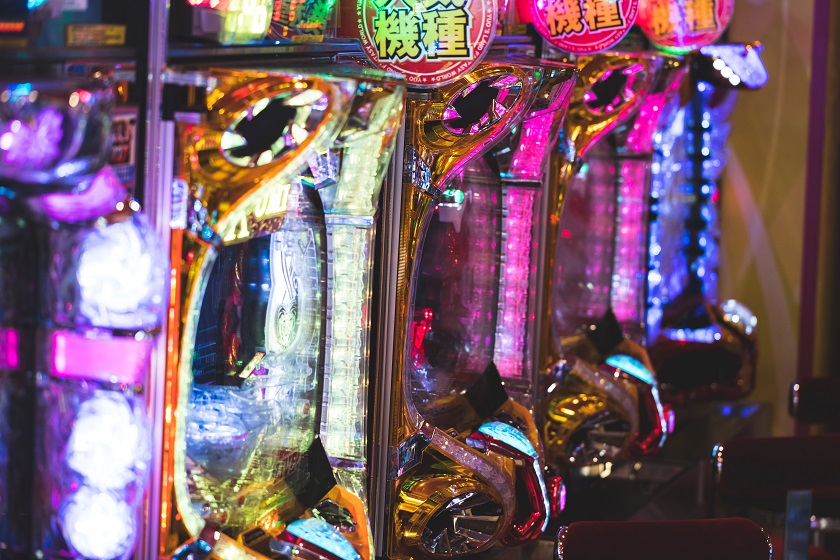
Few games are as uniquely and irreducibly Japanese as pachinko. Part pinball, part slot machine, part cultural institution — it's a game that takes minutes to start playing and a lifetime to fully understand. For visitors to Japan, stepping into a pachinko parlor is one of those genuinely distinctive experiences that no photograph quite captures. The cascade of steel balls, the blaze of LCD screens, the particular focus on each player's face as they work the knob — it's unlike anything in most travellers' experience.
If you've been curious about what pachinko actually is, how the machines work, and whether a first-timer has any chance of winning, this guide covers all of it.
What Is Pachinko?
Pachinko is a Japanese mechanical game that combines elements of pinball and slot machines. Players launch small steel balls around a vertical playing field, trying to land them in specific pockets to trigger jackpots and win more balls. Those balls can then be exchanged for prizes or (through a legal workaround) converted into cash. It's Japan's primary legal gambling activity, and one of the most distinctive entertainment experiences in the country.
The name pachinko is an onomatopoeia — it mimics the pachin sound the steel balls make as they ricochet around the playing field. The game has roots in a US children's game called the "Corinthian Bagatelle" from the 1920s, which found its way to Nagoya and became popular with adults. The first commercial pachinko parlor opened in Nagoya in 1948, and from there the industry grew to become one of Japan's largest entertainment sectors.
Today pachinko is one of those games that rewards patience and genuine engagement. Tourists might pick up the basics in an afternoon, but regulars spend years developing feel for specific machines and parlors.
How to Play Pachinko: Step by Step
To play pachinko, buy a bucket of balls at the parlor, sit down at a machine, and use the metal knob on the lower right to launch balls continuously into the playing field. Aim to land balls in the central pocket to trigger the jackpot slot. When you win, balls flood into your tray. Play continues until you run out of balls or choose to stop — at which point you exchange your remaining balls for a prize slip.
Straightforward walkthrough for your first time
Step 1 — Enter the parlor and exchange money for balls
At the front of most parlors, or at machines integrated into the seating row, you'll find a machine that exchanges yen notes for pachinko balls. The standard rate is around ¥4 per ball, typically sold in batches of ¥1,000 (about 250 balls). The balls are small steel spheres, about 11 mm in diameter, loaded into a tray at the bottom of your machine.
Step 2 — Choose your machine
Look for a machine with balls already in the tray (indicating someone was recently playing) or one displaying active bonus rounds. Many experienced players choose machines based on which have paid out recently — or avoid machines that have already paid out. For beginners, any machine works.
Step 3 — Turn the launch knob
The launch mechanism is the metal knob on the lower right of the machine. Turning it clockwise launches balls one after another at a speed determined by how far you turn. The skill in pachinko — and there is genuine skill — is finding the exact angle and speed that consistently channels balls toward the central target area (called the start chucker). Too gentle and the balls fall too low; too hard and they fly past the target entirely.
Most modern machines also have an auto-fire button that launches balls automatically at a fixed rate, allowing you to set the knob position and let the machine do the work while you watch.
Step 4 — Aim for the start chucker
When a ball lands in the start chucker (the central pocket), it triggers a digital slot-machine sequence on the LCD screen. Getting three matching symbols is a jackpot (oatari), which causes a flood of balls to cascade into your tray — sometimes hundreds at a time.
Step 5 — Collect your balls and exchange them
When you've finished playing, press the button to have your remaining balls counted and issued as a slip (or placed in a special tray). Take this to the prize counter, where you'll exchange balls for prizes, vouchers, or through a nearby affiliated vendor, cash. More on how that exchange works is in the legality section below.
Practical tips for first-timers:
- Don't touch another player's machine, tray or balls. Each machine is personal space.
- Conversation during play is minimal — this is not a social environment in the way a casino might be.
- If you're unsure about anything, a parlor staff member (wearing a uniform) can help — though language may be a barrier without a translation app.
- Start with a modest amount — ¥1,000 to ¥2,000 is plenty to get a feel for the game before committing more.
How to Win at Pachinko
Let's be honest about expectations first: pachinko is a form of gambling, and the house always has an edge. Over a long session, most players will spend more than they win. That said, there are genuine skill elements and strategies that experienced players use to improve their outcomes.
Choose your machine carefully
Experienced pachinko players spend considerable time watching machines before sitting down. A machine that hasn't paid out in a while may be "due" — though this is disputed, as each ball launch is in principle independent. More reliably, machines that are already in a bonus state (kakuhen mode) when you sit down give you a better starting position than a cold machine.
Master your launch angle
The single most important skill in pachinko is consistency of launch. Finding the exact knob position that reliably channels balls toward the start chucker — and holding it steady for hundreds of launches — is what separates competent players from beginners. Small adjustments of the knob make significant differences to where balls land. This takes time to develop.
Understand kakuhen (fever mode)
Modern digital pachinko machines have a "fever" mode called kakuhen (確変) — a state where the jackpot probability is dramatically increased, sometimes by a factor of 10 or more. If your jackpot triggers kakuhen, you have a much higher chance of hitting again quickly. Staying in kakuhen mode is how experienced players build their ball count. If you don't know whether your machine is in kakuhen, look at the machine's display — most show this clearly.
Play with a budget and stop when you hit it
The clearest advice anyone who plays pachinko regularly will give you: decide before you sit down how much you're willing to spend, and leave when you reach it — whether you're ahead or behind. The machines are designed to be engaging, and chasing losses is how most players end up spending far more than they planned.
Timing can help
Parlors may configure their machines differently at different times. Playing shortly after a parlor opens in the morning, or on weekdays when competition for machines is lower, may give you better access to the machines regulars consider favourable.
How Do Pachinko Machines Work?
Pachinko machines have evolved substantially from their purely mechanical origins.
Traditional mechanical machines work exactly like old-school pinball — a playing field of brass pins and pockets, repositioned regularly by parlor staff to maintain challenge. These original machines are rarer now but still found in some parlors, and they're often the best starting point for new players because of their straightforward nature.
Modern digital machines dominate the current market. These machines feature LCD displays running animated jackpot sequences, multiple game modes and a set of concepts unique to digital pachinko: kakuhen (increased jackpot probability mode), jitan (fast-cycle mode that speeds up the slot sequence), and koatari (a small jackpot that may or may not trigger kakuhen). These machines are tied to popular entertainment franchises — industry experts note that almost all modern pachinko machines now feature famous anime intellectual property, with the displays serving as multimedia showcases tied to major franchises. Neon Genesis Evangelion, Hokuto no Ken, Detective Conan and various Gundam series have all had dedicated machines.
Pachislo (pachislot) machines are the slot machine variant found alongside pachinko machines in most parlors. These use tokens rather than balls, and timing button presses correctly is the primary skill element. They're often less intimidating for newcomers because the gameplay loop is more familiar.
Why Is Pachinko So Popular in Japan?
achinko's popularity is a layered story — and its current chapter is one of gradual but persistent decline.
At its peak, the industry was enormous. The pachinko market reached ¥35 trillion in 2005, making it — by some measures — larger than the gambling revenues of Las Vegas, Macau and Singapore combined. It was Japan's dominant leisure industry, employing hundreds of thousands and embedded in the culture of virtually every town and city.
The market size in 2022 was ¥14.6 trillion — less than half the 2005 peak — and the number of pachinko parlors had fallen to 7,665, down from a high of 18,244 in 1997. As of 2023, the number of parlors had declined further to 6,839, with the player base ageing dramatically as younger generations choose other forms of entertainment.
What explains pachinko's enduring presence despite the decline? Several things. It remains Japan's primary legal outlet for gambling. It satisfies the national appetite for gaming through increasingly sophisticated digital machines. And for the generation that grew up with it, it carries a specific nostalgic weight — the particular rhythm of the balls, the sensory environment of the parlor, the meditative focus the game demands. Regulars describe it as a way to "zombie out" after a stressful week in a way few other leisure activities replicate.
Why Is Pachinko So Popular in Japan?
Pachinko's popularity is a layered story — and its current chapter is one of gradual but persistent decline.
At its peak, the industry was enormous. The pachinko market reached ¥35 trillion in 2005, making it — by some measures — larger than the gambling revenues of Las Vegas, Macau and Singapore combined. It was Japan's dominant leisure industry, employing hundreds of thousands and embedded in the culture of virtually every town and city.
The market size in 2022 was ¥14.6 trillion — less than half the 2005 peak — and the number of pachinko parlors had fallen to 7,665, down from a high of 18,244 in 1997. As of 2023, the number of parlors had declined further to 6,839, with the player base ageing dramatically as younger generations choose other forms of entertainment.
What explains pachinko's enduring presence despite the decline? Several things. It remains Japan's primary legal outlet for gambling. It satisfies the national appetite for gaming through increasingly sophisticated digital machines. And for the generation that grew up with it, it carries a specific nostalgic weight — the particular rhythm of the balls, the sensory environment of the parlor, the meditative focus the game demands. Regulars describe it as a way to "zombie out" after a stressful week in a way few other leisure activities replicate.
Is Pachinko Legal?
Gambling is technically illegal in Japan, yet pachinko has flourished for over 70 years. The reason is a carefully maintained legal loophole built around how winnings are exchanged.
Players cannot exchange their balls directly for cash inside the parlor, nor can they take balls off the premises. Instead, parlors issue prize slips or special prize tokens that players take to a separate vendor — typically a small booth just outside or nearby — where they can be exchanged for cash. These vendors then sell the tokens back to the parlor, completing a three-way transaction that keeps money at arm's length from the game itself.
Other parlors offer physical prizes instead of tokens — ranging from chocolate bars and cosmetics to gift vouchers and household items. The technicality allows pachinko to operate as a legitimate entertainment business, not a gambling establishment, which is why you'll find pachinko parlors on every high street in Japan without anyone raising an eyebrow.
Playing Pachinko as a Visitor to Japan
If you want to try pachinko for yourself, finding a parlor is easy. They're found across every city and large town, typically close to major train stations, identifiable by their bright neon signage and the sound of steel balls audible from the street.
Walking in for the first time is a genuine sensory experience. The noise of hundreds of machines running simultaneously is loud — earplugs are not unheard of among regulars. The visual intensity of the LCD displays and flashing lights is considerable. What has changed since earlier descriptions: Japan's smoking regulations, which fully came into effect in April 2020, restricted indoor smoking in pachinko parlors to designated smoking rooms. Many parlors — particularly larger chains and newer venues — have made their main playing floors smoke-free, making the environment considerably more accessible for non-smokers than it was previously.
Don't expect conversation or social help from other players. Pachinko is a solitary pursuit; regulars are focused on their machines and unlikely to offer guidance. Parlor staff can assist but English communication may be limited — having a translation app ready helps, which is one more reason a Pocket WiFi device is worth having throughout your trip.
For a gentler introduction, many video arcades across Japan have pachinko machines in a completely smoke-free, non-gambling environment where balls exchange for game tokens only. This is an ideal way to understand the feel of the machine and the gameplay before visiting a full parlor — particularly if the sensory intensity of a real parlor sounds like too much for a first try.
Frequently Asked Questions (FAQ)
1. How do you play pachinko for the first time?
Exchange money for balls at the machine or parlor counter (roughly ¥4 per ball). Sit down, load the balls into the tray and use the launch knob on the lower right to fire them into the playing field. Your goal is to land balls in the central start pocket, which triggers the jackpot sequence on screen. When the slot display shows three matching symbols, you've hit a jackpot and balls flood into your tray. When you're done, exchange your remaining balls for prizes or cash at the counter.
2. Can foreigners play pachinko in Japan?
Yes, absolutely. There are no restrictions on tourists or foreigners playing pachinko in Japan. Age restrictions apply — you must be 18 or older to enter a pachinko parlor.
3. Is there a way to win at pachinko?
There is genuine skill in controlling your launch angle and choosing favourable machines — experienced players do outperform random play. The most impactful things a beginner can do are: set a firm budget before playing, take time to find the right knob position for consistent targeting of the start chucker, and understand when a machine is in kakuhen (high-probability fever mode). That said, the house always has a mathematical edge, and pachinko should be approached as entertainment first.
4. Are pachinko parlors in Japan smoke-free?
Smoking in pachinko parlors was restricted to designated smoking rooms under Japan's revised Health Promotion Law, implemented fully from April 2020. Most larger parlors have smoking rooms separated from the main floor. Many newer venues are entirely smoke-free. If this matters to you, it's worth checking the specific parlor — but the open-floor smoking of the past is no longer the norm.
5. What's the difference between pachinko and pachislo?
Pachinko uses steel balls launched into a vertical playing field. Pachislo (pachislot) is the slot machine variant, using tokens and button timing as the skill element. Both are typically found in the same parlor side by side, and both use similar prize exchange systems. Pachislo tends to be more familiar in format for players from outside Japan.