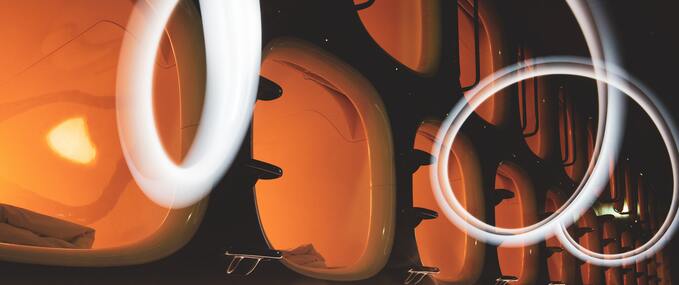


A capsule hotel offers compact, pod-style sleeping spaces (roughly the size of a single bed with sitting headroom) at budget prices — typically ¥3,000–6,000 a night, or a little more for design-led "luxury" capsules. Each capsule has a light, a privacy curtain or door, and usually power and Wi-Fi; bathrooms, lockers and communal baths are shared. Floors are separated by gender, and you check in by leaving your shoes at the entrance and storing your bag in a locker. It's clean, safe, uniquely Japanese, and a brilliant one-night experience — best near a train station for easy travel with your JR Pass.
Sleeping in a futuristic capsule hotel has become as uniquely Japanese as a traditional tea ceremony — and it's innovative, convenient and genuinely fun. If you're planning a holiday of a lifetime to Japan, there are certain things you just have to do: see Mount Fuji and the cherry blossoms, dine at an izakaya, relax in an onsen, take part in a tea ceremony. And on that "must do at least once" list belongs staying in a capsule hotel.
If you've never visited Japan before and never stayed in a capsule hotel, you might be unsure where to start. That's where we come in. We've put together a helpful guide to everything you need to know — including where to find some of the best examples, all reachable with your Japan Rail Pass.
Table of contents:
Intro
What is a Capsule Hotel?
Capsule Hotel Rules and Etiquette
Japan’s Best Capsule Hotels
Bonus Tips for Accommodation
What Is a Capsule Hotel?
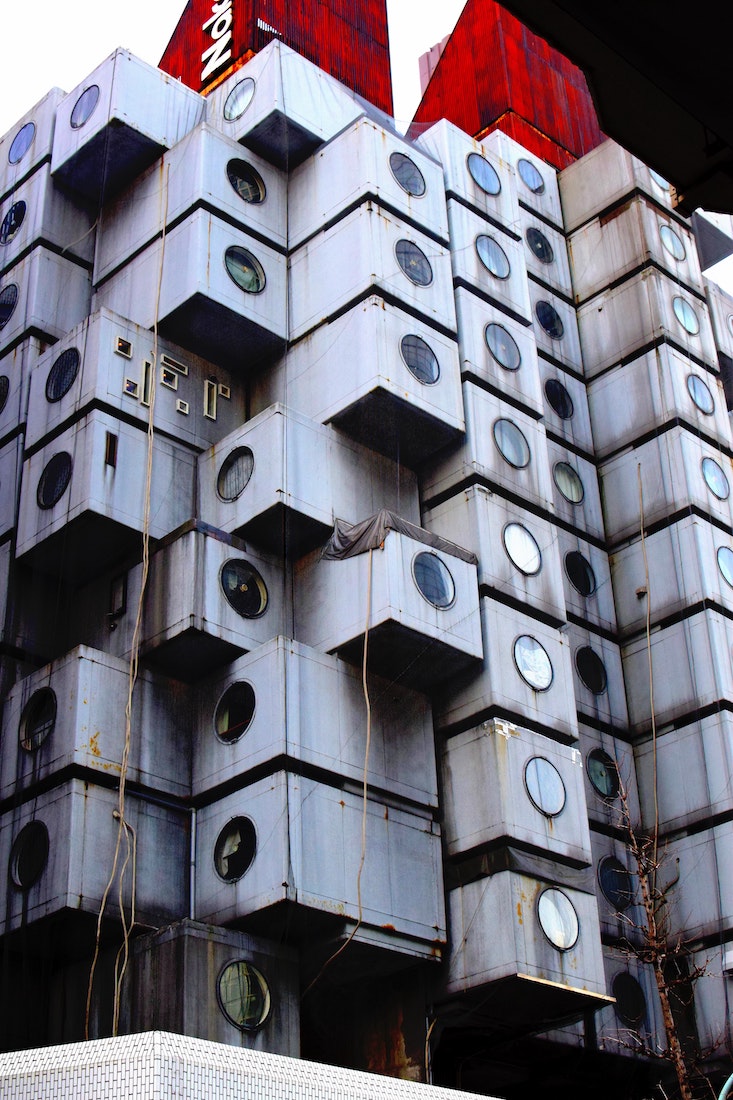
Capsule hotels feel like they've been around forever — but you might be surprised to learn the first one didn't open until 1979 in Osaka. The aptly named Capsule Inn Osaka, in the busy Umeda district, was designed by the celebrated architect Kisho Kurokawa (a leading figure of Japan's Metabolist movement). It was the first of its kind, and it spawned a phenomenon that spread across Japan and, eventually, around the world. Remarkably, the original Capsule Inn Osaka is still operating today.
A capsule is essentially a compact, moulded sleeping pod — roughly the size of a single bed with enough headroom to sit up — stacked in rows, usually two units high. They were originally intended to be practical and convenient (simple places to sleep for a night) rather than luxurious. But over the decades, they've diversified and evolved dramatically.
Today, there are mixed and women-only capsule hotels, and you can even find capsules for couples (such as UNPLAN in Kagurazaka). Each capsule comes with a light, a door or curtain for privacy, and often a power outlet and a small shelf — and sometimes extras like a TV or alarm clock. Most now have free Wi-Fi inside the capsules too, although for a reliable connection everywhere, we always recommend Pocket WiFi when travelling around Japan.
Beyond the capsules themselves, these hotels offer all the amenities you'd expect from a budget hotel or hostel — from restaurants and laundry facilities to communal baths, lounges and vending machines. Some have spas and treatment rooms, and others have uniquely Japanese extras like manga libraries.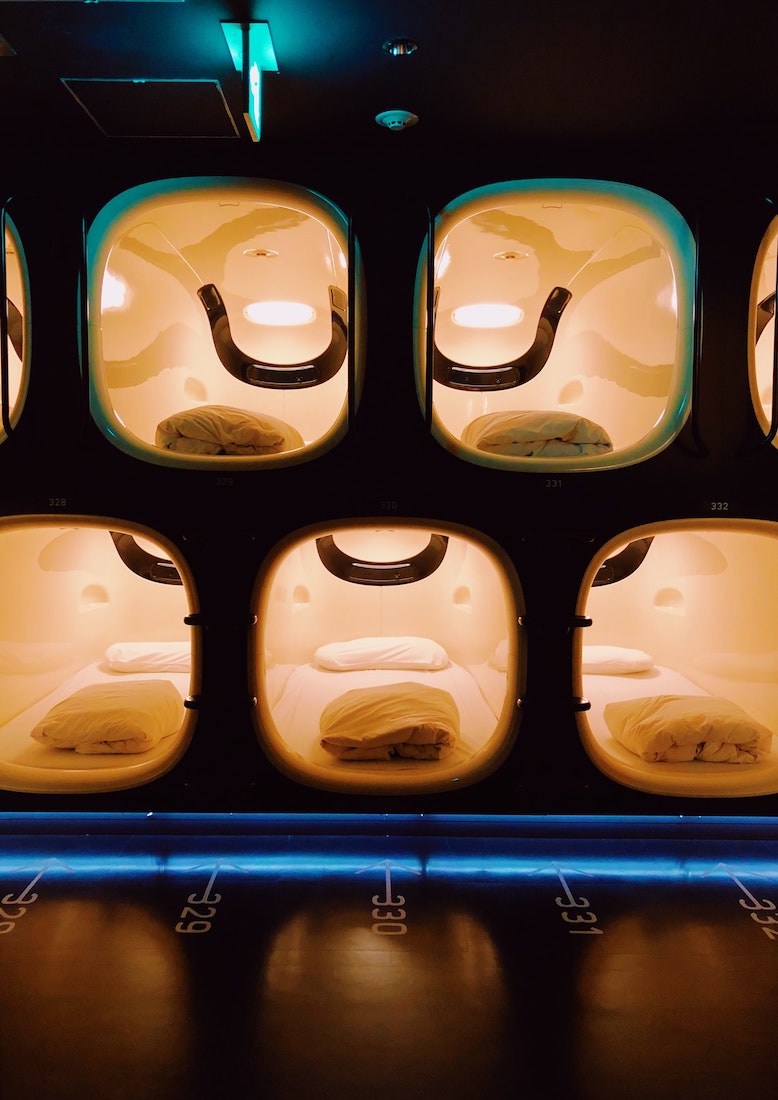
How Much Does a Capsule Hotel Cost?
One of the biggest appeals of a capsule hotel is the price. A typical capsule costs ¥3,000–¥6,000 per night (roughly $25–50 / £20–40), which is significantly cheaper than a standard hotel room. Prices in major cities like Tokyo, Osaka and Kyoto tend to be at the higher end of that range, and rates can rise during peak seasons such as cherry blossom (late March–April) and the autumn leaves (November).
The newer, design-led "luxury" capsule hotels — with smart pods, larger cabins and premium amenities — typically cost more, often in the ¥5,000–¥10,000+ range. For that, you get a much more comfortable, private experience that rivals a budget hotel room.
A few money-saving notes:
- Some capsule hotels offer hourly rates or short "rest" stays — handy if you've missed the last train or have a long layover
- A handful rent by the week or month for longer stays
- Booking ahead online (via Booking.com, Rakuten Travel, or the hotel's site) usually secures the best price, as popular hotels sell out fast
What to Expect on Your First Stay
If you've never stayed in one before, here's roughly how a capsule hotel stay unfolds:
-
Remove your shoes at the entrance. As is standard etiquette in Japan, you'll take off your shoes at the door and store them in a small locker or cubbyhole, often swapping them for slippers.
-
Check in at reception. You'll be given a capsule number, a floor assignment, and a key or wristband for your locker and floor access.
-
Find your locker. Capsules are too small for luggage, so you'll store your bag in a separate locker (sometimes a tall locker for suitcases, sometimes a smaller one with a larger luggage room nearby). Take what you need for the night — phone charger, toiletries, a book, earplugs — ideally in the small net bag often provided.
-
Use the communal bath or shower. Most capsule hotels have a shared bathing area (often a Japanese-style sento with a soaking tub). Soap and shampoo are usually provided. Many guests change into the provided loungewear or yukata.
-
Settle into your capsule. Climb (or step up) into your pod, pull the curtain or door closed, and enjoy your cosy, private little space. Most have controls for the light and sometimes a TV or alarm.
- Keep quiet. Sound carries, so the golden rule is to be considerate — phones on silent, voices low, and no rummaging through noisy bags late at night.
The whole experience is clean, safe, and surprisingly comfortable — and it's amazing how much character you can find within four small walls.
Capsule Hotel Rules and Etiquette
Capsule hotels run smoothly because everyone follows a few shared courtesies. Keep these in mind:
-
Shoes off at the entrance: Always remove your shoes when you arrive and use the lockers/slippers provided
-
Respect the gender-segregated floors: Most capsule hotels separate floors by gender, managed by keycard access. If you're travelling as a mixed-gender pair, you'll likely be on different floors (or you can seek out a mixed-dormitory hotel like UNPLAN Kagurazaka)
-
Keep noise to a minimum: Capsules have curtains or thin doors, not soundproof walls. Be quiet, especially at night, and set alarms to vibrate
-
No phone calls in the capsule area: Step out to a lounge for calls
-
Don't eat inside the capsule: Most hotels ban food in the sleeping areas; use the lounge or dining area
-
Tidy up after yourself in the shared bathrooms and lounges
- Observe checkout times: Many capsule hotels require you to vacate fairly early in the morning, even if you booked an overnight rate
Are Capsule Hotels Right for You?
Capsule hotels are a fantastic experience for many travellers — but they're not for everyone. Here's an honest look:
You'll probably love it if you:
- Want an affordable, clean, safe place to sleep in a central location
- Are travelling solo and happy with shared facilities
- Want to tick a uniquely Japanese experience off your bucket list
- Are catching an early train or arriving late and just need a comfortable night's sleep
It might not suit you if you:
- Feel anxious in tight, enclosed spaces — the capsules are cosy, and if you're strongly claustrophobic, this may not be the experience for you (consider a design-led hotel with larger cabins, like First Cabin, as a gentler option)
- Are travelling as a family with young children — many capsule hotels are adults-only, though some (like Nine Hours) accept children aged 6 and above
- Need lots of space, total quiet, or a private bathroom
Our honest take: one night is the perfect amount. It's a wonderful, memorable experience — and then many travellers happily move on to somewhere more spacious for the rest of their trip.
Japan’s Best Capsule Hotels
Capsule hotels have become a global hotel phenomenon since they were introduced to Japan in the late 1970s and can now be found everywhere from Sydney, London, to Reykjavik, Iceland, but Japan remains the originator and king. Here’s our selection of Japan’s coolest capsule hotels:
Book and Bed, Ikebukuro, Tokyo.
If you’re a book lover, what could be better than sleeping inside a bookshop, and not just inside, but in a bunk surrounded by books, that looks like a cross between a hotel and a library. It’s definitely a special experience and has proven so popular with book lovers in Japan and international visitors that it’s spawned a whole phenomenon in itself. If you want to read more about Japan and literature check out our Literary Tour of Japan and our guide to the Five Books to Read Before You Visit Japan.
Nine Hours, Kyoto.
Designed with a super cool minimalist aesthetic, the inside of this hi-tech capsule hotel looks like a sleek spacecraft with sleeping pods. If you’ve ever dreamt of going into space, this is the next best thing. Nine Hours is a chain and they have locations across Japan, including Tokyo.
The Millennials Shibuya, Tokyo.
Japan has continued to innovate with its capsule hotels and this is a prime example. With your entire pod controlled by a smartphone app, guests can adjust the bed, control the door and even access an 80-inch home theatre screen. This is a capsule hotel made luxurious thanks to technology. It also features art on the walls of each pod created by Tokyo’s Tosaken company and local artists.
Hotel Cabana, Osaka.
Osaka. Hotel Cabana’s capsules may look like giant steel ovens, but they’re a lot cosier on the inside, we promise. The hotel also boasts a 24-hour spa, gym, relaxation lounge and treatments.
Centurion Cabin, Tokyo.
As we mentioned above, capsule hotels were traditionally for men, but Centurion Cabin & Spa is exclusively for women. Each capsule has a large TV and aroma diffuser. Other women-only capsule hotels include Le Luck Spa in Tokyo and Osaka Hokko Marina Resort Guesthouse, which also allows children up to nine-years-old.
First Cabin, Akihabara.
Ideally located just four minutes’ walk from Akihabara station, every room has a bed, TV, headphones and safety deposit box. Read our Guide to Akihabara to discover why this district is so popular among tourists, Otaku (geek) and J-Culture fans. Also check out Green Plaza Shinjuku for being in another popular Tokyo location.
Capsule Hotel Astil, Dotonbori.
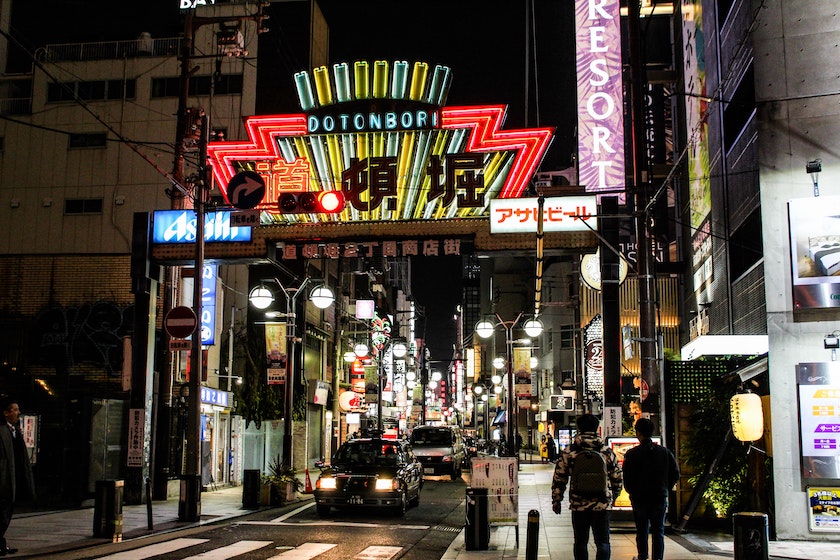
In the heart of Minami where you’ll find Osaka’s famous Dotonbori area, this hotel is brilliantly located for exploring the city and sampling its famous seafood, street food and ramen. It’s also just a minute from Namba train station.
Capsule Inn, Osaka.
Last on our list but definitely not least is the original capsule hotel (yes, it’s still open!) in Osaka. Please note, Capsule Inn Osaka is only open to men over the age of 19.
There are many more capsule hotels across Japan to choose from of course and you’ll often find them congregated around train stations, airports, or other transport hubs for convenience as well as in densely populated areas. You can reach Tokyo, Kyoto and Osaka with ease (and travel between all three) on the Shinkansen bullet train with your JRailPass – one ticket for all of Japan’s super-efficient domestic rail network.
Remember, if you’re travelling around the inner cities of major cities such as Tokyo, Osaka and Kyoto (where many capsule hotels are found) then you’ll want to invest in a prepaid travel card such as an ICOCA, PASMO or Suica card for Tokyo’s public transport, as well as a Japan Rail Pass for getting around the rest of Japan. Check out our Top 30 Tips for Using Japan’s Metros for advice and guidance on using the city’s subway network.
Bonus Tips for Accommodation
A capsule hotel is just one of many wonderful and distinctive places to stay in Japan. To round out your trip, consider mixing in:
-
A traditional ryokan — a Japanese inn with tatami floors, futon bedding and often an onsen, for an authentic cultural experience
-
A book hotel — read yourself to sleep surrounded by thousands of books (see our book hotel guide)
-
A temple stay (shukubo) — spend the night at a Buddhist temple, often with vegetarian shojin ryori meals and morning meditation
- A business hotel — clean, compact, affordable private rooms, ideal as a comfortable base between more adventurous stays
And wherever you stay, staying connected makes everything easier — consider Pocket WiFi for reliable internet throughout your trip.
A Uniquely Japanese Night's Sleep
Staying in a capsule hotel is one of those quintessentially Japanese experiences that's quirky, affordable, and genuinely fun. Whether you're ticking it off your bucket list, saving money on a busy travel day, or just curious about how the Japanese reinvented the budget hotel, a night in a pod is well worth it. Pick one near a JR station, pack your essentials into that little net bag, pull the curtain closed, and enjoy a surprisingly cosy night's sleep — futuristic Japan style.
With your Japan Rail Pass in hand and a capsule booked, you're all set for an unforgettable trip. Sweet dreams!
Frequently Asked Questions
1. Are capsule hotels safe?
Yes — capsule hotels are very safe. They have 24-hour reception, secure lockers for your belongings, keycard-controlled floor access, and gender-segregated floors. Japan is also one of the safest countries in the world for travellers generally.
2. Are capsule hotels gender-segregated?
Almost always, yes. Most capsule hotels separate floors by gender, and some are entirely male-only or female-only. Mixed-gender pairs are usually placed on different floors — though a few hotels, like UNPLAN Kagurazaka, offer mixed dormitory rooms.
3. Do capsule hotels have private bathrooms?
No — there's no room for a bathroom inside a capsule. Toilets and shower/bathing facilities are shared, typically located on each floor or in a communal area. Soap and shampoo are usually provided, and many capsule hotels feature a Japanese-style communal bath (sento).
4. Can families and children stay in capsule hotels?
It varies. Many capsule hotels are adults-only, partly due to the gender-segregated floors. However, some — such as Nine Hours — accept children aged 6 and above, while others (like First Cabin) require guests to be 12 or older. Always check the hotel's policy before booking.
5. Are capsule hotels good for claustrophobic travellers?
If you panic in tight spaces, a traditional capsule may not be the best choice. That said, the pods are designed to feel cosy rather than cramped, with room to sit up and move around, and you can leave whenever you wish. If you're slightly nervous, consider a "luxury" option like First Cabin, where the cabins are larger and tall enough to stand in.
6. Is one night in a capsule hotel enough?
For most travellers, yes — one night is the ideal way to enjoy the novelty without the shared facilities and compact space wearing thin. Many people do a single capsule-hotel night as a memorable experience, then switch to a more spacious option for the rest of their trip.
.png)