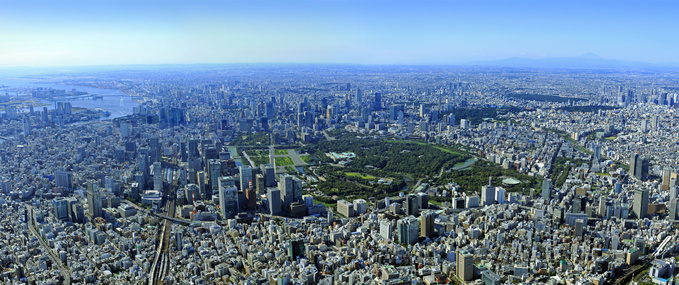


Quick Answer: The Tokyo Imperial Palace is the residence of Japan's Emperor, set in a vast green oasis in central Tokyo on the former site of Edo Castle. While the palace buildings themselves aren't open to the public, you can visit two parts for free: the East Gardens (walk straight in via the Otemon, Hirakawamon or Kitahanebashimon gates, open from 9 am, closed Mondays and Fridays), and the inner grounds on a free guided tour (twice daily, registration via the Imperial Household Agency). Both are free of charge, and it's just a 10-minute walk from Tokyo Station, easily reached with your Japan Rail Pass.
Looking at a map of Tokyo, there's a big green area around which the rest of the metropolis seems to revolve, that's the Imperial Palace. In the heart of one of the world's busiest cities sits this calm, walled oasis of gardens, moats, ancient stone walls and pine-dotted lawns, covering roughly 1.15 square kilometres in central Chiyoda ward. It's one of Tokyo's most rewarding (and surprisingly peaceful) sights, and best of all, the parts open to visitors are completely free.
In this guide, we'll cover how to enter, what it costs, what to see, opening hours, and how the Tokyo Imperial Palace compares to Kyoto's famous Nijo Castle.
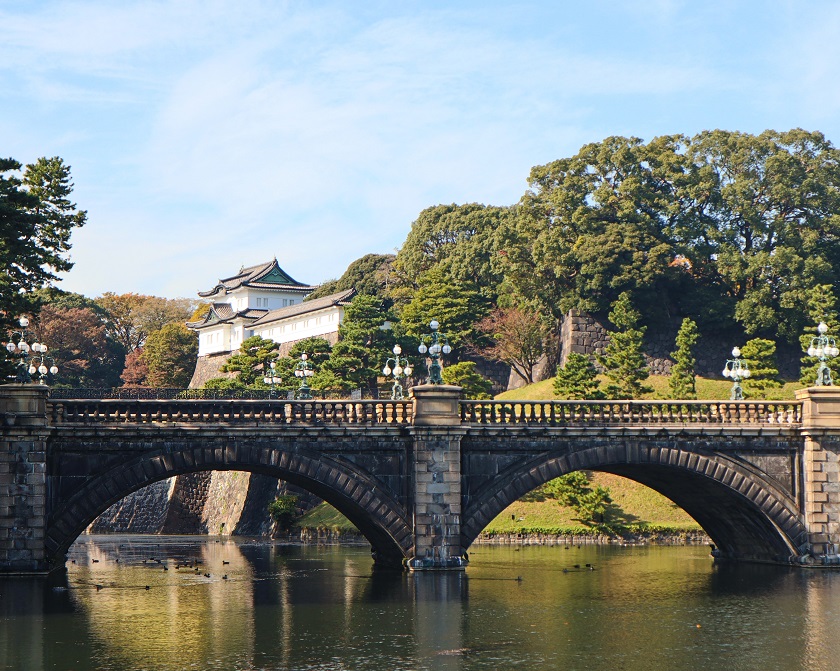
Introduction to the Imperial Palace and Garden
The palace stands on the grounds where Edo Castle once stood — the main seat of power for the Tokugawa Shogun during the Edo period. After the fall of the shogunate in 1868, the seat of imperial power was moved from Kyoto to Tokyo, and the Imperial Palace was built on this site in 1888.
The palace was heavily damaged during the Second World War but has since been restored to its original style. It remains the official residence of the Emperor of Japan. According to legend, the first emperor of Japan was a descendant of Amaterasu, the sun goddess, and the same imperial line has continued for well over 1,500 years — making it one of the oldest continuous hereditary monarchies in the world. Today, the Emperor's role is purely symbolic, with no political power. In 2019, Emperor Naruhito — the 126th emperor — was enthroned, and he serves alongside Empress Masako.
How to Enter the Imperial Palace
This is the most common point of confusion, so let's make it clear. The palace buildings themselves are not open to the public (it's a working royal residence, much like Buckingham Palace).
However, there are two ways to experience the Imperial Palace, and both are free:
The East Gardens: The easiest option. The Imperial Palace East Gardens have been open to the public since 1968, and you can simply walk in through one of three gates — no ticket, no reservation. This is where you'll find the old Edo Castle ruins, the Ninomaru Garden, and the Sannomaru Shozokan museum. (Full gate and hours details below.)
The inner-grounds guided tour: For a deeper experience, the Imperial Household Agency runs free guided tours of the inner palace grounds. The tour takes about 75 minutes and walks you past key sights and buildings from the outside (no buildings are entered). Tours are conducted in Japanese, with English audio guides and printed materials available.
When: Generally twice daily (around 10:00 and 13:30), Tuesday to Saturday, with closures on Sundays, Mondays, public holidays, the New Year and summer afternoons
How to register: Apply in advance online via the Imperial Household Agency website (sankan.kunaicho.go.jp), or try for a same-day spot on a first-come basis at the Kikyomon Gate on the morning of the tour.
Tour schedules and closure days change seasonally — always confirm on the official Imperial Household Agency website before your visit.
Tickets and Admission Price
Here's the good news: there is no admission fee. Both the East Gardens and the guided inner-grounds tour are completely free of charge. There are no tickets to buy in advance for the East Gardens — you simply walk in.
For the guided tour, registration is free; you're just reserving a place, not paying for one. The only things you might spend money on are optional extras nearby, such as rowing boats at Chidorigafuchi moat (around ¥500–800) or entry to the separate museums in adjacent Kitanomaru Park.
This makes the Imperial Palace one of the best-value major attractions in Tokyo — a world-class historic site, beautiful gardens, and a fascinating slice of imperial history, all for free.
Visiting the palace grounds
Part of the palace grounds are open year-round to the public; these include the East Gardens, Old Castle tower, Ninomaru garden, Sannomaru museum, National Museum of Modern Art and Kitanomaru park. More below on each of them.
East Gardens
The Imperial East Gardens are the main grounds open to the public. They make up part of Edo Castle’s innermost defences. Now the east gardens are a public park with reminders of the past; several gates, moats, and guard houses tell the story and lives of Edo castle.
Old Castle tower
Located within the East Gardens is the Old Castle tower of Edo Castle. The tower used to be the tallest defensive tower in Japan, but was destroyed in a fire. While the tower itself no longer stands, the foundation of the former castle tower remains and can be climbed for a good view over the surrounding area.
Ninomaru garden
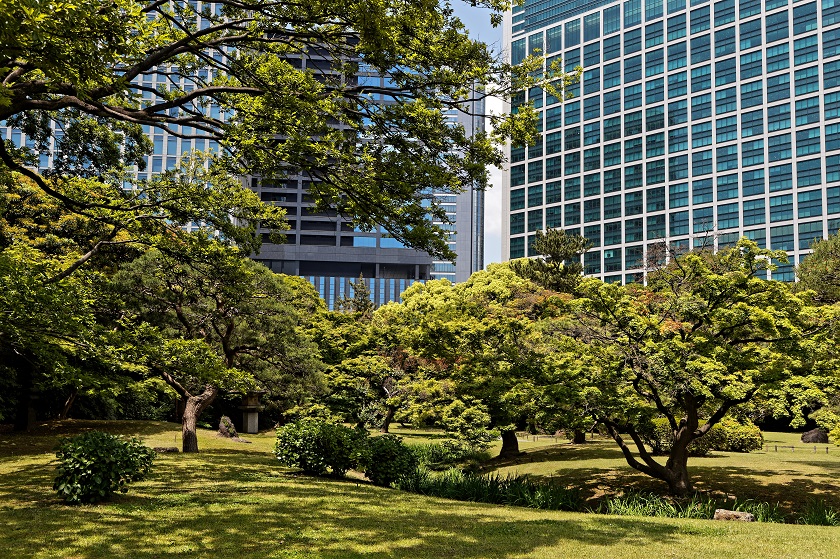
Located within the East Gardens, Nonomaru Garden is a Japanese model garden. It’s nice to stroll through and makes for an excellent photo spot, especially during the autumn leaves season.
Sannomaru museum
Also known as the Museum of the Imperial Collections, the Sannomaru Museum houses over 6,000 pieces of art created by imperial household artists between 1533 and 1934. The museum provides an interesting perspective into the imperial household throughout the centuries.
National Museum of Modern Art
The Tokyo National Museum of Modern Art is the principal museum collecting and exhibiting modern Japanese art, and is well known for its 20th-century art on display, which mixes Western and Japanese styles.
Kitanomaru park
Located on the north side of the Imperial Palace. It was used as both a medicinal garden and a secure residential compound for members of the Tokugawa extended family. Today it is a beautiful park to walk around in and just relax.
Sakura viewing
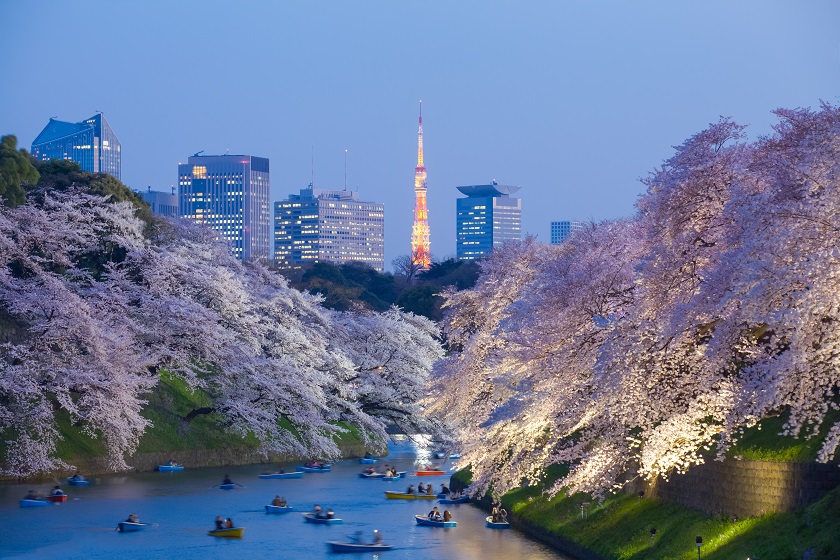
The Imperial Palace is one of the most famous Sakura viewing points in Japan and a great spot for pictures. A popular activity is to rent a boat and paddle around the outer canals of the palace. Once the Sakura leaves start dropping, they turn completely pink.
How to Enter the Imperial Palace East Gardens
The palace is located close to Tokyo Station and can be reached on foot in 5-10 minutes from the Marunouchi side of the station. Exit the station, then follow Gyoko-dori avenue. You’ll see the palace slowly rising. Once you get to the end of Gyoko-dori, turn right to get to the Otemon-gate entrance, leading right into the Eastern Gardens.
Opening hours are as follows:
9:00 to 17:00 (March 1 to April 14 and all of September)
9:00 to 18:00 (April 15 through August)
9:00 to 16:30 (October)
9:00 to 16:00 (November through February)
Admission ends 30 minutes before closing.
The park is closed on Mondays, Fridays, the New Year period and when special proceedings are held.
The park is free to access, though security spot checks are regularly performed.
Nijo Castle vs the Imperial Palace
Travellers often compare these two or confuse them. The key thing to know: they're in different cities, and they offer quite different experiences.
Tokyo Imperial Palace
Location: Tokyo (Chiyoda ward)
What it is: The current residence of the Emperor of Japan, on the old Edo Castle site
Nijo Castle (Nijo-jo)
Location: Kyoto
What it is: A former Kyoto residence of the Tokugawa shoguns; UNESCO World Heritage Site
If you're in Tokyo, the Imperial Palace East Gardens are a wonderful free walk through imperial and Edo-castle history, but you won't go inside any historic buildings.
If you're in Kyoto, Nijo Castle is the one where you actually step inside a preserved shogun's palace, complete with the famous "nightingale floors" that chirp underfoot to warn of intruders. Both are superb; they simply offer different things, and many travellers visit both on a Japan trip. For more, see our guide to what it's like to visit a Japanese palace.
Tips for visiting
-
Go early to beat the crowds. The East Gardens are most peaceful first thing in the morning, just after the 9am opening
-
Check the closed days before you go. Mondays and Fridays for the East Gardens; the inner-grounds tour skips Sundays and Mondays. A wasted journey to a closed gate is a real (and avoidable) disappointment
-
Visit in cherry blossom or autumn season if you can. The grounds and the nearby Chidorigafuchi moat are spectacular in late March–early April (blossoms) and November (autumn leaves). The springtime Inui Street opening (late March–early April) is a rare chance to walk a normally-closed avenue lined with around 100 cherry trees — no registration required
-
Wear comfortable shoes. The grounds are large, and the perimeter is a popular 5 km jogging route, there's a lot of walking
-
Combine it with nearby sights. Tokyo Station's beautiful red-brick Marunouchi building, the Marunouchi shopping district, and Kitanomaru Park's museums are all within easy walking distance
- Bring a little cash for optional extras like the Chidorigafuchi rowing boats
A Peaceful Heart in the Middle of Tokyo
The Imperial Palace is a remarkable thing: a vast, tranquil green heart in the centre of one of the busiest cities on Earth, steeped in over a thousand years of imperial history and the legacy of the mighty Edo Castle. Whether you're strolling the free East Gardens, photographing the iconic Nijubashi Bridge, or joining a guided tour of the inner grounds, it's a calm, fascinating and completely free way to spend a few hours in Tokyo.
With your Japan Rail Pass getting you to Tokyo Station in comfort, the palace is just a short stroll away. Add it to your Tokyo itinerary — and don't forget your camera. Have a wonderful visit!
Frequently Asked Questions
1. Can you go inside the Imperial Palace buildings?
No. As the working residence of the Emperor, the palace buildings are not open to the public. You can explore the East Gardens and the outer grounds, and the guided tour walks you past (but not inside) key buildings. If you want to step inside a genuine historic palace, visit Nijo Castle in Kyoto instead.
2. How do I get to the Imperial Palace from Tokyo Station?
It's a 10-minute walk. Take the Marunouchi Central Exit and head west along Gyoko-dori avenue toward the palace; turn right at the end to reach the Otemon Gate into the East Gardens. Tokyo Station is covered by your JR Pass via many lines.
3. Is the Imperial Palace worth visiting?
Yes, it's one of central Tokyo's most peaceful and historic spots, completely free, and easily combined with Tokyo Station and the Marunouchi district. It's especially beautiful during the cherry blossom and autumn leaf seasons. If you enjoy gardens, history, or just a calm break from the city bustle, it's well worth a couple of hours.
.png)